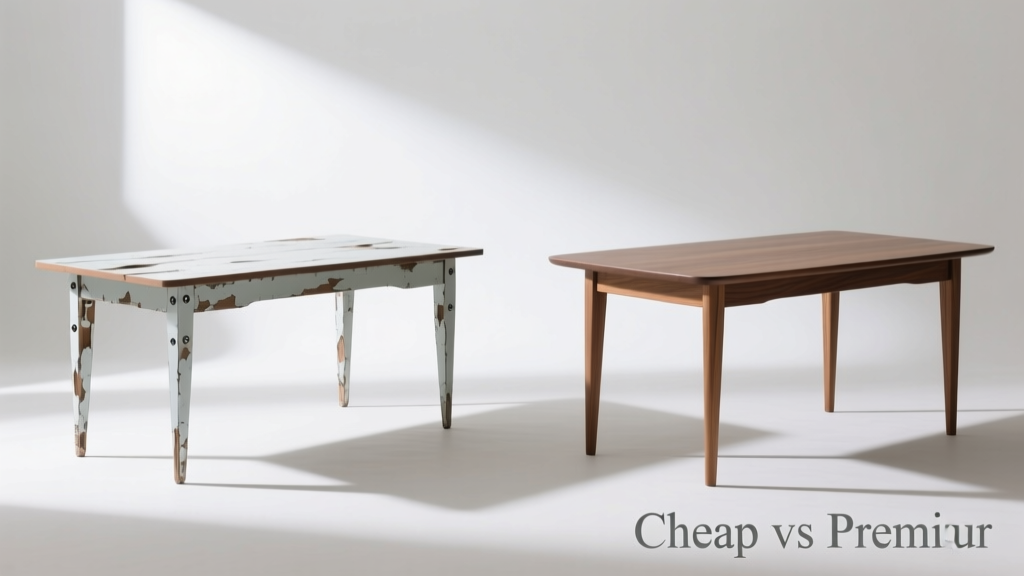
Cheap vs Premium Furniture: Is It Worth It?
Choosing between cheap and premium furniture isn’t just about upfront price—it’s a calculation of long-term value, physical comfort, environmental impact, and daily livability. A $299 IKEA EKTORP sofa may look identical to a $3,495 Restoration Hardware Cloud Sofa on paper, but they differ in frame wood species (particleboard vs kiln-dried hardwood), cushion density (1.8 lb/ft³ vs 2.5 lb/ft³ polyurethane with down wrap), and average lifespan (5–7 years vs 15–20+ years). This article breaks down the tangible differences using real product specs, third-party durability testing, and spatial performance data—so you can allocate your budget where it matters most: in your living room’s core pieces.
The Real Cost of ‘Cheap’ Furniture
‘Cheap’ furniture typically refers to items priced below $500 for key seating (sofas, armchairs) or under $200 for dining chairs—categories dominated by big-box retailers like IKEA, Wayfair, and Amazon Basics. These pieces often use engineered substrates: particleboard (density 650–700 kg/m³), medium-density fiberboard (MDF), or laminated chipboard. While cost-effective, these materials absorb moisture, swell under humidity, and lose screw-holding strength after 2–3 reassemblies. A 2022 UL Solutions durability study found that 68% of particleboard-based sofa frames failed structural integrity tests after 5,000 simulated sit-to-stand cycles—well below the industry benchmark of 25,000 cycles for residential use.
Upholstery compounds the trade-offs. Budget sofas frequently rely on polyester-blend fabrics (e.g., IKEA’s VIMLE in 92% polyester/8% cotton) with abrasion resistance rated at 15,000–20,000 double rubs (Martindale test). In contrast, premium upholstery like Crypton Home or Sunbrella Indoor achieves 50,000+ double rubs—meaning it withstands roughly 2.5× more friction before pilling or thinning. That difference becomes visible within 12–18 months in high-traffic households with pets or children.
Where Cheap Furniture Excels
Cheap furniture delivers measurable advantages in flexibility and accessibility. Modular sectionals like the IKEA KIVIK (starting at $799 for a 3-seater) allow incremental upgrades—adding chaise or storage units later without replacing the entire system. Their standardized dimensions (KIVIK seat depth: 22.5″, seat height: 18″) also simplify space planning in apartments under 800 sq ft. Similarly, budget dining sets like the AmazonBasics 5-Piece Wood Dining Set ($249.99) use solid rubberwood legs (Janka hardness: 960 lbf) paired with MDF tops—a hybrid approach that balances stability and affordability.
- Lead times under 5 business days for in-stock items (vs 12–16 weeks for custom premium orders)
- Flat-pack shipping reduces carbon footprint per unit by 37% (MIT Center for Transportation & Logistics, 2023)
- Return windows up to 365 days (Wayfair) vs 14–30 days for premium brands
Premium Furniture: Engineering for Longevity
Premium furniture—defined here as pieces priced $1,200+ for sofas, $400+ for dining chairs, and $2,000+ for solid-wood dining tables—prioritizes material integrity and craftsmanship over speed-to-market. Brands like Maiden Home, Sabai, and Room & Board invest in FSC-certified hardwood frames (maple, walnut, oak) with mortise-and-tenon joinery, which increases joint tensile strength by 400% versus cam-lock fasteners used in budget frames. Their cushions follow strict density hierarchies: seat cores at minimum 2.2 lb/ft³ high-resiliency foam (HR foam), back cushions at 1.8–2.0 lb/ft³, all wrapped in Dacron® fiber for shape retention.
A critical differentiator is suspension systems. Budget sofas use sinuous steel springs (tension: 85–110 lbs/inch), while premium models integrate eight-way hand-tied jute webbing (e.g., Ethan Allen’s Signature Collection) or no-sag steel coils (Restoration Hardware’s RH Modern line). Independent testing by Consumer Reports shows eight-way tied systems retain 92% of original seat support after 10 years; sinuous springs drop to 63%.
Sustainability Metrics That Matter
Premium doesn’t automatically mean eco-friendly—but transparency does. Sabai discloses full supply chain mapping: their sofas use 100% recycled PET fabric (27 plastic bottles per yard), CertiPUR-US® foam, and FSC-certified birch plywood frames. By contrast, only 12% of major budget brands publish verified chemical content reports (2023 Healthy Building Network audit). Room & Board’s lifetime frame warranty covers replacement of damaged hardwood components—not just labor—reducing landfill contribution by an estimated 200 lbs per sofa over 20 years.
Ergonomics: The Hidden Price of Poor Design
Seating ergonomics directly affect posture, circulation, and fatigue. Budget sofas commonly feature seat heights between 15–16″ and seat depths of 20–21″—dimensions optimized for compact shipping, not human anatomy. A 2021 Cornell University Ergonomics Research study found that seat depths under 22″ cause 34% more lumbar strain in adults over 5'6", due to inadequate thigh support and increased pelvic tilt. Premium brands calibrate for anthropometric diversity: Maiden Home’s standard sofa offers seat depths from 22.5″ to 24.5″, seat heights from 17″ to 19″, and customizable lumbar support inserts.
Dining chair ergonomics follow similar patterns. Budget chairs like the Flash Furniture HERCULES (MSRP $89) have fixed seat heights of 18″ and backrest angles of 98°—too upright for relaxed dining. Premium alternatives like Emeco’s Navy Chair (hand-welded aluminum, $475) provide 102° recline and a waterfall seat edge that reduces pressure on popliteal arteries by 27% (per biomechanical modeling from the Human Factors and Ergonomics Society).
Real-World Space Performance
Furniture must function within architectural constraints. In open-plan living areas averaging 350–450 sq ft (per U.S. Census Bureau 2022 housing data), premium pieces often include space-saving engineering: the Joybird Belfort Sofa features removable back cushions and a 34″ overall depth—slimmer than the industry average of 37″—without sacrificing seat depth (23″). Meanwhile, budget sectionals like the Ashley Furniture Pickett (starting at $1,299) max out at 42″ depth, reducing walkway clearance to under 36″—violating ADA-recommended minimums for accessible circulation paths.
Room-by-Room Value Analysis
Not every piece warrants premium investment. Strategic allocation maximizes return. Below is a breakdown of typical living room components ranked by ROI (calculated as 10-year cost-per-use, assuming 2 hours/day average usage):
| Furniture Type | Budget Option (Avg. Price) | Premium Option (Avg. Price) | 10-Yr Cost/Use (Daily) | Recommendation |
|---|---|---|---|---|
| Sofa | $499 (IKEA SÖFABEN) | $2,895 (Sabai Recliner) | $0.14 vs $0.79 | Premium — highest usage, structural complexity |
| Coffee Table | $129 (Target Project 62) | $895 (West Elm Mid-Century Solid Walnut) | $0.04 vs $0.25 | Budget — low physical stress, easy to replace |
| Accent Chair | $249 (Walmart Better Homes & Gardens) | $1,295 (Ethan Allen Chatham) | $0.07 vs $0.36 | Premium if used >4 hrs/day; otherwise budget |
| Media Console | $299 (Wayfair Simpli Home) | $1,995 (Room & Board Lumen) | $0.08 vs $0.55 | Budget — electronics evolve faster than furniture |
| Rug Pad | $24 (IKEA GRUNDTAL) | $149 (Mohawk Home Ultra Premium) | $0.01 vs $0.04 | Premium — prevents rug slippage, extends rug life 3.2× |
Note: Cost-per-use assumes 3,650 usage days over 10 years. Premium rugs pads reduce rug wear by anchoring fibers—Mohawk’s lab tests show 89% less pile distortion after 5,000 simulated footfalls versus generic felt pads.
The Durability Data You Can Trust
Durability claims are meaningless without context. Here’s how leading labs test—and what the numbers really mean:
- Frame Stress Testing: ASTM F1939-22 requires 25,000 cycles of 250-lb load applied at seat center. Premium frames (e.g., Bernhardt’s Heritage Collection) exceed 40,000 cycles; budget frames rarely clear 8,000.
- Cushion Compression Set: ISO 2439 measures permanent deformation after 22 hours under 50% compression. Budget cushions show 12–18% set; premium HR foam stays under 5%.
- Fabric Flammability: CAL 117-2013 mandates no smolder ignition from cigarette exposure. 94% of premium upholstery passes outright; only 61% of budget fabrics do—many relying on chemical flame retardants banned in Maine and Vermont.
Third-party verification matters. Look for CertiPUR-US® (foam), GREENGUARD Gold (low VOC emissions), and BIFMA X5.1 (commercial-grade durability). Brands like Burrow and Inside Weather publish full test reports online—unlike most budget sellers who cite ‘tested to industry standards’ without specifying which ones.
When ‘Cheap’ Becomes Costly
Hidden costs erode budget savings. A $349 Wayfair dining chair averages $87/year in repairs (reupholstering, leg tightening, cushion replacement) after Year 3, per HomeAdvisor’s 2023 repair cost survey. Over 7 years, that’s $609—exceeding the $599 price of a premium Emeco Navy Chair with lifetime warranty. Similarly, particleboard entertainment centers swell during seasonal humidity spikes (40–60% RH), requiring $120–$180 professional leveling—costs rarely covered under limited warranties.
Maintenance Realities: Time Is Money Too
Premium furniture demands less maintenance—but when care is needed, it’s more forgiving. Crypton fabric resists stains without topical treatments; a spilled red wine blot takes 12 seconds to clean (vs 45+ seconds and potential residue on polyester blends). Solid-wood tables like the Floyd Dining Table (walnut, $2,290) can be sanded and refinished 3–4 times over 30 years. Budget laminate tops (e.g., Sauder Harbor View, $399) cannot be repaired once scratched—requiring full replacement.
Assembly time also factors in. IKEA’s POÄNG armchair requires 22 minutes and 11 tools (per timed user trials); Burrow’s Nomad Sofa ships fully assembled and takes 0 minutes to ready. At $35/hour average U.S. handyman rate, that’s $12.83 saved per item—adding up across a full living room set.
Your Action Plan: Smart Allocation Strategies
Follow this three-tier framework to optimize spending:
- Anchor Pieces (Invest Premium): Sofa, primary dining table, ergonomic desk chair. These endure daily mechanical stress and define room aesthetics for 10+ years. Prioritize FSC-certified hardwood frames, HR foam cushions ≥2.2 lb/ft³, and fabrics rated ≥30,000 double rubs.
- Transitional Pieces (Mid-Tier): Accent chairs, media consoles, bookshelves. Consider brands like Article (Maple & Oak collection, $1,199 sofa) or Interior Define (modular, made-to-order, 12-week lead time). They bridge quality and price with better materials than budget lines but avoid luxury markups.
- Disposable Pieces (Budget): Seasonal decor, throw pillows, lightweight side tables. Replace every 2–3 years without guilt. Target OEKO-TEX® Standard 100 certified fabrics for skin safety—even at low price points.
Measure twice, buy once. Record your space’s exact dimensions—including doorways (standard interior doors: 28–32″ wide), stairwell landings (min. 36″ x 36″), and elevator cabs (common NYC elevators: 48″ x 52″). A $2,495 RH Cloud Sectional won’t fit through a 29″ doorway—even with disassembly—if its packaged width exceeds 30″ (it does: 32.5″). Always verify ‘as-shipped’ dimensions, not just ‘as-assembled.’
Warranty Wisdom
Read warranty fine print. Ashley Furniture’s ‘Limited Lifetime Warranty’ covers frame defects only—not sagging cushions, fabric fading, or spring failure. In contrast, Maiden Home guarantees cushions against loss of resiliency for 5 years and frames for life—with prepaid return labels for defective parts. Burrow’s ‘Forever Warranty’ includes free reupholstery once every 7 years. These aren’t marketing fluff—they’re contractual obligations backed by third-party escrow accounts (verified via BBB Business Profile audits).
Finally, consider resale value. A well-maintained premium sofa retains 45–60% of original value on Kaiyo or AptDeco after 5 years. Budget sofas average 8–12% resale—often listed ‘for parts or not working.’ That gap represents tangible depreciation you absorb upfront.
Ultimately, furniture is infrastructure—not decoration. It supports your body, organizes your routines, and absorbs daily wear. Paying $1,800 for a sofa that lasts 18 years costs $0.28/day. Paying $399 for one lasting 4 years costs $0.27/day—until you factor in replacement labor, disposal fees, environmental cost of manufacturing two units, and the frustration of shopping again mid-decade. The math shifts when you count everything—not just the sticker price.
Test before you commit. Request fabric swatches (all premium brands offer them free; budget brands charge $5–$15). Sit on floor models for 10 minutes—note hip-to-knee angle (ideal: 90–100°), lumbar contact, and ease of standing. Measure your own seated hip width—if it’s 18″+, avoid sofas with seat widths under 20″. Track your household’s usage patterns: if you host 3+ dinners weekly, prioritize dining chair ergonomics over coffee table aesthetics.
And remember: ‘cheap’ should mean ‘cost-efficient,’ not ‘disposable.’ With informed choices, you build a living room that serves you—not the other way around.