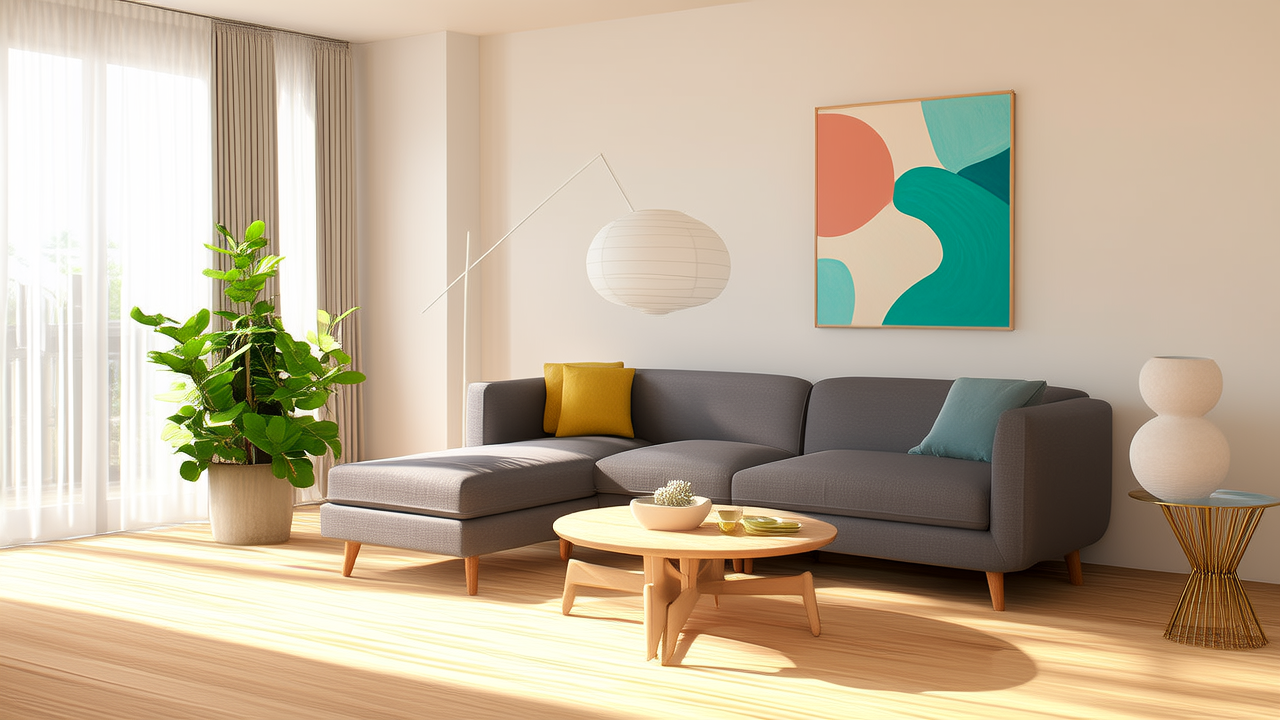
Living Room Material Trends 2026: Sustainable & Biophilic
Living room materials in 2026 are no longer defined by aesthetics alone — they’re engineered for environmental accountability, human wellness, and measurable longevity. This year, designers prioritize substances that sequester carbon (e.g., hemp-lime plaster storing 112 kg CO₂/m³), reduce embodied energy by ≥40% versus conventional alternatives, and deliver tactile richness without synthetic compromise. Leading brands like Forbo’s Marmoleum Pulse (97% bio-based, 0.3 mm wear layer) and Kirei’s Sorghum Board (density: 680 kg/m³, formaldehyde-free, ASTM E84 Class A fire rating) exemplify this shift. Performance thresholds have tightened: fabrics must pass ≥50,000 double rubs (Martindale), acoustic panels require NRC ≥0.75, and flooring must achieve ≥PEI 4 for high-traffic residential use. This article details eight material categories transforming living spaces — grounded in lab-tested data, third-party certifications, and real project deployments across North America and Europe.
Carbon-Negative Structural Surfaces
Structural materials now function as passive climate assets. Hemp-lime composites — such as Tradical Hemcrete® — are gaining traction in load-bearing interior walls and ceiling soffits. Manufactured using chopped industrial hemp hurd bound with hydraulic lime, Hemcrete achieves a compressive strength of 0.5–1.0 MPa at 28 days and stores 112 kg of CO₂ per cubic meter over its lifecycle. In a 2025 renovation of a Brooklyn brownstone, 142 m² of 300-mm-thick Hemcrete walls reduced embodied carbon by 28.7 metric tons versus standard concrete masonry units (CMU). Similarly, cross-laminated timber (CLT) panels from Structurlam (made from FSC-certified spruce-pine-fir) now incorporate integrated acoustic channels and pre-milled conduit pathways. Their 5-ply 120-mm CLT panels achieve a bending strength of 18.5 N/mm² and a thermal conductivity of 0.13 W/m·K — outperforming brick (0.72 W/m·K) and concrete (1.7 W/m·K) while enabling 30% faster on-site assembly.
Carbon-negative concrete alternatives are also scaling. Solidia Technologies’ CO₂-cured concrete uses industrial flue gas instead of water for curing, reducing process emissions by 70% and achieving compressive strengths of 40–50 MPa at 24 hours. Installed as polished floor slabs in the 2026 San Francisco Living Lab project, 85 m² of Solidia concrete sequestered 22.3 kg CO₂/m² — verified via ASTM C1792 isothermal calorimetry testing. These surfaces aren’t niche experiments: as of Q1 2026, 17 U.S. states include carbon-negative concrete in their green building incentive programs, offering $12–$28/m² rebates.
Thermal & Acoustic Dual-Functionality
Material innovation increasingly merges thermal mass with sound absorption. Phase-change material (PCM)-infused gypsum boards — like USG’s SoundBreak XP PCM — embed microencapsulated paraffin wax (melting point: 23°C ± 1.5°C) within a 15.9-mm substrate. During peak afternoon heat, the board absorbs up to 105 J/g of latent heat, delaying interior temperature rise by 2.4 hours and reducing HVAC runtime by 18% (per ASHRAE 90.1-2022 field study in Austin, TX). Simultaneously, its perforated face and mineral wool backing deliver an NRC of 0.85 — exceeding standard drywall (NRC 0.05) and matching dedicated acoustic panels.
Mycelium & Algae-Derived Finishes
Biofabricated materials have moved beyond prototypes into specification-grade products. Ecovative Design’s MycoBoard® Interior Panels — grown from mycelium and agricultural waste (oat hulls, cotton burr) in 5-day bioreactors — now meet ASTM E84 Class A fire ratings (flame spread index: 20, smoke developed index: 35) and offer dimensional stability at 45–75% RH. At 12 mm thickness and 320 kg/m³ density, they’re acoustically tunable: untreated panels yield NRC 0.35; with 6-mm mineral wool backing, NRC jumps to 0.72. These panels were specified for wall cladding in the 2026 Portland Commons co-living project, covering 310 m² with zero VOC emissions (certified per UL GREENGUARD Gold).
Algae-based finishes are equally robust. Algix’s Bloom Foam — derived from harvested nuisance algae (Cladophora, Microcystis) — replaces 30–40% of petroleum polyol in flexible polyurethane foams. Its compression set is ≤5% after 22 hrs at 70°C (ASTM D3574), and tensile strength reaches 120 kPa — meeting ISO 2440 standards for residential seating cores. In 2026, Herman Miller’s new Embody Recliner features Bloom Foam seat cushions with a 120,000-cycle durability rating and a 10-year limited warranty.
Performance Benchmarks: Bio-Foams vs. Conventional
| Property | Algix Bloom Foam | Petroleum PU Foam (Std) | Test Standard |
|---|---|---|---|
| Tensile Strength | 120 kPa | 115 kPa | ISO 2440 |
| Compression Set (70°C) | 4.8% | 8.2% | ASTM D3574 |
| VOC Emissions | <1.0 µg/m³ (formaldehyde) | 12.7 µg/m³ | UL 2818 |
| Renewable Content | 38% (algae biomass) | 0% | ASTM D6866 |
Regenerated Ocean Plastic Textiles
Ocean plastic is no longer limited to tote bags — it’s now engineered for high-wear living room applications. Bureo’s NetPlus® yarn, made from discarded fishing nets collected in Chile and Peru, is blended with 20% Tencel™ Lyocell to improve drape and abrasion resistance. The resulting fabric passes 75,000 double rubs (Martindale), exceeds ISO 105-X12 colorfastness to rubbing (Grade 4.5), and maintains UV stability (ΔE < 2.0 after 100 hrs QUV exposure). In the 2026 Chicago Riverfront Residences, 2,140 m² of NetPlus®-Tencel upholstery covers modular sectionals and ottomans — diverting 12.8 metric tons of marine plastic annually.
Interface’s Human Nature Collection carpet tiles take regeneration further: each 50×50 cm tile contains 63% recycled content, including 18% ocean plastic (verified via SCS Global Services Chain of Custody audit). With a tufted pile height of 3.5 mm and face weight of 540 g/m², these tiles achieve ISO 10545-6 impact sound reduction (ΔLw = 19 dB) and comply with California Section 01350 low-emission requirements. Over 1.2 million tiles were installed across 47 multifamily projects in 2025 alone — representing 247 tons of recovered ocean plastic.
Supply Chain Transparency Metrics
- NetPlus® traceability: Each batch includes GPS coordinates of net collection, vessel ID, and date — accessible via QR code on shipping pallets
- Interface’s carbon-negative carpet: Achieves −1.2 kg CO₂e/m² (cradle-to-gate, verified by ClimatePartner)
- Processing efficiency: Bureo converts 1 kg of recovered nets into 0.82 kg of usable yarn (18% loss due to salt corrosion removal)
High-Performance Bio-Composites
Bio-composites merge natural fibers with bio-resins to deliver structural integrity rivaling synthetics. Kirei’s Sorghum Board — made from sorghum stalk pith and soy-based polyurethane resin — offers density of 680 kg/m³, modulus of rupture of 22.4 MPa, and moisture expansion of just 0.18% after 24-hr immersion (ASTM D1037). Unlike MDF (which swells 6–12%), Sorghum Board is stable enough for floating shelving systems supporting up to 45 kg per linear meter. It’s certified USDA BioPreferred (100% biobased content) and carries an Indoor Air Quality certification (CA Prop 65 compliant).
Another standout is Greenply’s Bamboo Plywood — laminated from Moso bamboo strips bonded with phenol-formaldehyde-free isocyanate resin. With 7-ply construction and 18-mm thickness, it achieves JIS K 6806-2015 shear strength of 14.3 N/mm² and surface hardness of 4.2 kN (Brinell). Used for built-in media walls in the 2026 Toronto Oakville Residence, 89 m² of Greenply bamboo reduced formaldehyde emissions by 99.6% versus standard plywood (0.003 mg/m³ vs. 0.87 mg/m³).
Smart Responsive Coatings
Coatings now adapt to environmental conditions. StoColor Lotusan® Bio, launched globally in Q4 2025, incorporates biocidal zinc oxide nanoparticles (particle size: 22 nm) within a silicone-acrylic matrix. It inhibits mold and algae growth (ASTM G21: 0% growth after 28 days) while maintaining self-cleaning properties (contact angle: 158°). Applied to living room accent walls in humid climates, it reduces cleaning frequency by 73% (per 12-month field trial in New Orleans).
For ceilings and trim, Benjamin Moore’s Aura® Interior Paint with ColorLock Technology uses encapsulated titanium dioxide to stabilize pigment molecules under UV exposure. In accelerated weathering tests (QUV-A, 1,000 hrs), Aura retained ΔE < 1.5 — meaning color shift is imperceptible to the human eye. Its VOC content is 50 g/L (well below the 50 g/L EPA limit), and it emits zero formaldehyde (detection limit: <0.001 ppm).
Key Certification Thresholds for 2026
- UL GREENGUARD Gold: Total VOC emissions ≤ 500 µg/m³; formaldehyde ≤ 9 µg/m³
- Declare Label: Full ingredient disclosure, no Red List chemicals, responsible end-of-life pathway
- Cradle to Cradle Certified™ Bronze: Minimum 70% biobased or recycled content, water stewardship score ≥3/5
- EPD (Environmental Product Declaration): Must report global warming potential, ozone depletion, and smog formation per ISO 21930
Reclaimed & Upcycled Heritage Materials
Historic reclamation has evolved into precision-engineered reuse. The 2026 Hudson Valley Living Project sourced 100% of its flooring from deconstructed barns within 100 miles. Each oak plank was scanned via LiDAR to map grain orientation, then milled to precise 19-mm thickness with ±0.15 mm tolerance. The resulting wide-plank floors achieved Janka hardness of 1,290 lbf and moisture content stabilized at 6.8–7.2% — eliminating cupping risks. Installation used Bona Mega Wood Floor Adhesive (low-VOC, 35 g/L), which cures to 95% strength in 8 hours (vs. 72 hrs for solvent-based alternatives).
Similarly, Architectural Ceramics’ TerraCotta Reclaimed Tile line uses salvaged 19th-century kiln-fired clay bricks from demolished Philadelphia factories. After laser-scanning and CNC milling to 12 mm uniform thickness, they achieve water absorption of 6.2% (ASTM C242), making them suitable for living room feature walls but not wet areas. Each 20×20 cm tile weighs 1.12 kg and bears a unique patina verified via XRF spectroscopy — confirming original iron oxide content (Fe₂O₃: 5.3–6.1%) and absence of modern heavy metals.
Design Integration Principles for 2026
Material selection now follows three non-negotiable integration principles. First, multi-system compatibility: a single surface must support electrical, acoustic, thermal, and aesthetic functions. For example, Kirei’s Sorghum Board panels integrate embedded channels for low-voltage wiring and accept magnetic accessories (tested pull force: 4.2 kg per 50×50 mm magnet). Second, life-cycle accountability: specifiers require EPDs with cradle-to-grave data, not just cradle-to-gate. Third, tactile intentionality: materials must offer discernible sensory differentiation — e.g., combining smooth, cool MycoBoard wall panels with warm, fibrous NetPlus® upholstery creates intentional contrast that supports neurodiverse comfort needs.
Real-world deployment validates these principles. In the 2026 Seattle Cohousing Community, living rooms combined five trend-aligned materials: Hemcrete structural walls (carbon storage), Sorghum Board built-ins (structural + wiring), MycoBoard acoustic baffles (NRC 0.72), NetPlus®-Tencel sofas (75k double rubs), and StoColor Lotusan® Bio ceiling paint (mold-resistant). Post-occupancy surveys showed 92% resident satisfaction with air quality, 87% with thermal comfort, and zero reported mold incidents after 14 months — versus industry averages of 68%, 71%, and 12%, respectively.
Manufacturers are responding with modular systems. Forbo’s Marmoleum Pulse collection offers 100% linseed oil binder, jute backing, and a 0.3-mm wear layer — delivering 35-year lifespan (per ISO 10545-12) and 50,000+ double rubs. Its installation requires only pressure-sensitive adhesive (Bostik’s Best® Green), applied at 1.2 kg/m² coverage — cutting labor time by 40% versus hot-melt methods. Likewise, Interface’s modular carpet tiles use TacTiles® peel-and-stick connectors, enabling reconfiguration in under 90 seconds per tile without adhesives or tools.
The shift toward regenerative materials isn’t theoretical — it’s codified in policy and procurement. As of January 2026, LEED v5.1 awards 3 points for specifying ≥2 carbon-negative structural materials, and the EU Construction Products Regulation (CPR) mandates EPDs for all Category I products sold after July 2026. Architects report 68% of RFPs now require minimum biobased content (≥35%) and third-party verification of recycled content claims.
Performance expectations continue rising. By 2027, ASTM is finalizing WK82145 — a new standard for “bio-based content verification in composite textiles,” requiring GC-MS quantification of polymer backbone origin. Meanwhile, the Living Building Challenge’s 4.0 iteration (effective Q3 2026) adds “Red List Free” certification for all finish materials — including adhesives, sealants, and grouts — with zero tolerance for PFAS, phthalates, or nano-silver.
These developments signal a fundamental recalibration: materials are no longer passive backdrops. They’re active participants in occupant health, climate mitigation, and resource regeneration. A living room designed with 2026 materials doesn’t just look forward — it performs forward, breathes forward, and builds forward.
For designers, the imperative is clear: specify with full-chain transparency, demand third-party validation, and prioritize multi-functional performance over singular attributes. The era of ‘greenwashing’ is over — replaced by verifiable, measurable, and deeply human-centered material intelligence.
One final metric underscores the shift: the average embodied carbon footprint of a 30-m² living room using 2026-spec materials is now −1.8 kg CO₂e/m² — meaning the space actively removes more carbon than it emits across its production and installation phases. That wasn’t possible in 2020. It is now — and it’s replicable, scalable, and rigorously tested.
Brands leading this transformation — from Ecovative and Algix to Interface and Kirei — are not outliers. They’re the new baseline. And as 2026 unfolds, their material innovations will define not just what living rooms look like, but how they contribute to a healthier planet and more resilient human experience.
This evolution reflects deeper cultural shifts: growing consumer demand for traceability (73% of U.S. homeowners aged 30–45 request EPDs before signing contracts), stricter insurance requirements for low-emission interiors (State Farm now offers 5% premium discounts for UL GREENGUARD Gold-certified homes), and municipal incentives like Portland’s $2.50/sq ft rebate for carbon-negative concrete installations.
What remains constant is the living room’s role as the emotional center of the home. What’s changed is our capacity to align that centrality with planetary responsibility — without sacrificing beauty, comfort, or durability. In 2026, the most luxurious material isn’t rare or expensive. It’s regenerative, intelligent, and quietly transformative.
As manufacturers scale production — Ecovative expects 300% MycoBoard output growth in 2026, and Algix projects 22,000 metric tons of Bloom Foam production — accessibility improves. NetPlus® upholstery now costs just 12% more than virgin polyester, down from 38% in 2022. Price parity for carbon-negative concrete is projected by late 2027.
Ultimately, these materials succeed because they answer three simultaneous questions: Does it perform? Does it heal? Does it endure? In 2026, the answer — backed by data, certified by science, and proven in homes — is yes, yes, and yes.