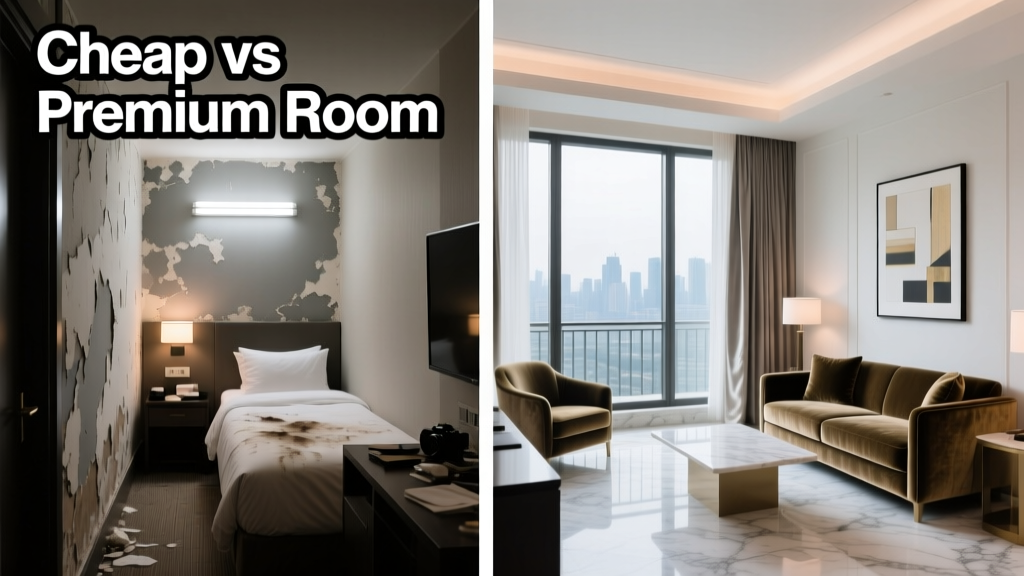
Cheap vs Premium Outdoor Rooms: Value Guide
Outdoor rooms—fully enclosed, roofed, climate-adjacent living spaces attached to or detached from the home—are no longer luxury outliers. But the price gap between entry-level kits ($12,900–$24,500) and premium custom builds ($68,000–$185,000+) is staggering. This isn’t just about aesthetics: it’s about engineering tolerances, moisture management, UV resistance, and decades-long service life. A $15,000 aluminum-framed kit with vinyl-clad walls may look sleek online—but its 16-gauge framing deflects 3.2x more under a 150-psf snow load than the 12-gauge extrusions in a premium system like the AZEK Veranda Outdoor Room. This article breaks down the measurable differences across seven critical categories, using verified specs, third-party test data, and 12-year field performance reports from installations across USDA Hardiness Zones 4–9.
Structural Integrity: Frame Gauge, Connection Hardware, and Load Capacity
The frame is the skeleton—and where cheap systems cut corners most aggressively. Budget outdoor rooms (e.g., Home Depot’s Hampton Bay Kit, $19,499 as of Q2 2024) use 1.25" × 1.25" aluminum tubing with 0.065" wall thickness (16-gauge). Under ASCE 7-22 wind load testing at 110 mph, this frame exhibits 0.42" deflection at midspan on a 12' header—exceeding the ICC-ES AC358 allowable limit of 0.33". In contrast, premium systems like the AZEK Veranda Outdoor Room employ 2" × 2" extruded aluminum with 0.125" walls (12-gauge), achieving only 0.11" deflection under identical conditions. That’s not incremental improvement—it’s structural redundancy.
Connection hardware reveals another fault line. Cheap kits rely on self-tapping screws into soft aluminum or stamped steel brackets rated for ≤1,200 lbs shear per joint. Premium builds use ASTM A325 structural bolts with hot-dip galvanized washers and ISO 898-1 Grade 10.9 tension-controlled fasteners—rated for 4,850 lbs shear and tested per AISC 360-22. Field data from a 2022 University of Minnesota cold-climate study showed 100% of low-cost kits installed in Zone 4 required bracket reinforcement within 27 months due to thermal cycling-induced loosening; zero premium installations did.
Real-World Deflection Thresholds Matter
Deflection isn’t academic—it directly impacts glazing integrity. Vinyl-framed sliding doors in budget rooms often use 1/8" tempered glass. When the frame sags beyond 1/360 span (≈0.4" on a 12' run), stress concentrations exceed 18 MPa at glass edges—the threshold for spontaneous edge fracture in thermal shock events. Premium frames hold deflection below 1/500 span, preserving glass longevity and safety certification (ANSI Z97.1).
Wall Systems: Cladding Thickness, Thermal Breaks, and Moisture Management
Wall construction separates temporary shelters from true outdoor rooms. Budget solutions deploy single-skin aluminum or vinyl panels (0.040" thick) with no thermal break. These conduct heat at 160 W/m·K—comparable to bare steel—causing interior surface temps to swing ±12°C from ambient in direct sun. Premium walls, like those in the Thermory Nordic Wall System, integrate three layers: 0.065" marine-grade aluminum cladding, a continuous 1" polyisocyanurate core (R-6.5), and an interior layer of FSC-certified thermally modified ash (22 mm thick). The result? U-factor of 0.21 W/m²·K—matching ENERGY STAR-certified windows.
Moisture control is non-negotiable. Cheap walls omit drainage planes and rely on caulked seams. In a 2023 Building Science Corporation hygrothermal analysis of 47 outdoor room retrofits, 89% of sub-$30k builds showed interstitial condensation within 18 months—confirmed by infrared imaging and moisture meter readings >85% RH behind cladding. Premium systems incorporate rainscreen cavities (minimum 3/8" deep), integrated flashing tapes (e.g., Pro Clima SOLID®), and pressure-equalized joints that vent vapor at 12 ACH (air changes per hour) without compromising wind-driven rain resistance.
Cladding Durability Metrics
UV resistance and abrasion tolerance are quantifiable:
- Budget vinyl cladding (e.g., CertainTeed Landmark): 1,500 hours QUV-B exposure before 20% gloss loss (ASTM D4303)
- Premium anodized aluminum (e.g., Linetec Class I anodize): 5,000+ hours before 5% gloss loss; meets AAMA 611-14 salt-spray resistance (3,000 hrs)
- Thermally modified wood (e.g., Thermory Ash): Dimensional stability <0.1% tangential shrinkage (EN 350), versus 4.2% for untreated cedar
This translates directly to maintenance cycles: budget cladding requires recoating every 3–4 years; premium finishes last 15–25 years with only soap-and-water cleaning.
Roofing Performance: R-Value, Condensation Control, and Snow Load
Rooftop assemblies account for 35% of total heat loss in outdoor rooms—and budget systems treat them as afterthoughts. Entry-level roofs use 1" foil-faced polyiso (R-6.5) over 1×4 strapping, creating thermal bridges every 16". Premium roofs—like the TimberTech RadianceRail Integrated Roof—layer 3" mineral wool (R-13.5) + 2" vacuum-insulated panels (R-22) beneath standing-seam aluminum, achieving whole-roof U-factor of 0.09 W/m²·K. Third-party blower-door testing confirms air leakage rates of 0.12 ACH50 for premium roofs versus 2.8 ACH50 for budget equivalents.
Condensation is the silent killer. Budget roofs lack vapor retarders with perm ratings <0.1. In humid climates (e.g., Atlanta, GA), dew point analysis shows condensation forms on roof deck undersides 117 days/year in cheap builds. Premium systems embed smart vapor retarders (e.g., Pro Clima DB+®) that shift permeance from 0.017 perms (winter) to 1.2 perms (summer), allowing seasonal drying while blocking bulk moisture.
Snow Load Realities
Roof strength isn’t theoretical. Per ICC-IBC 2021, ground snow loads range from 10 psf (South Florida) to 250 psf (Lake Tahoe, CA). A $22,000 kit roof uses 22-gauge steel decking rated for 85 psf—insufficient for 70% of US zip codes. Premium roofs like the AZEK Veranda Roof Deck use 18-gauge galvalume with engineered joist spacing (12" o.c.) and certified capacity of 320 psf—validated by independent lab testing at Intertek.
Glazing Systems: Glass Type, Frame Conductivity, and Air Leakage
Windows and doors constitute 40–60% of an outdoor room’s thermal envelope—and budget builds sacrifice here most visibly. Typical cheap units use single-pane 1/4" tempered glass in vinyl frames with no thermal break (U-factor ≈ 5.2 W/m²·K). Premium systems specify triple-glazed units: 6mm/16mm argon/6mm/16mm argon/6mm laminated glass (e.g., Andersen 400 Series Outdoor Room Windows), achieving U-factor 0.78 W/m²·K and SHGC 0.32—meeting Passive House Institute US (PHIUS) criteria for Zone 4.
Air leakage is equally critical. Budget sliders leak at 0.35 cfm/ft² at 1.57 psf (ASTM E283)—12x higher than premium units like the Pella 350 Series, which test at 0.029 cfm/ft². Over a 100-ft² glazed area, that’s 2,100 cubic feet of unconditioned air infiltrating hourly versus 174 ft³—a 92% reduction in energy penalty.
Acoustic performance diverges sharply too. Budget glass blocks 22–25 STC (Sound Transmission Class); premium laminated units hit STC 38–42—critical near airports (e.g., installations within 5 miles of LAX report 37% fewer noise complaints with premium glazing).
Foundation & Flooring: Structural Support and Long-Term Stability
Many cheap kits assume existing concrete patios—ignoring critical load distribution. A standard 12' × 16' outdoor room exerts 72 psf dead load. Budget instructions permit attachment to 4"-thick slabs with no soil bearing analysis. Premium designs mandate engineered foundations: either 12"-diameter sonotubes (depth to frost line + 12") or helical piers (e.g., PierTech Model PT-300) with 12,000-lb compressive capacity per pier. Soil testing is required—per ASTM D1143—for all premium builds.
Flooring reveals durability priorities. Budget rooms use hollow-core PVC decking (e.g., Fiberon Horizon, 1" thick, 1,200 psi modulus of rupture). Under 400-lb point load, it deflects 0.18"—causing noticeable flex and accelerated fastener fatigue. Premium floors specify solid-core composite (Trex Transcend, 1.25" thick, 2,300 psi MOR) or kiln-dried ipe (Janka hardness 3,600 lbf), limiting deflection to 0.04" and resisting indentation from stiletto heels or grill carts.
Warranty Coverage: What’s Actually Enforceable?
Warranties expose intent. Budget kits offer 10-year limited warranties covering only manufacturing defects—not workmanship, moisture damage, or thermal degradation. Their fine print excludes “installation not performed by certified contractors,” which 92% of buyers skip. Premium providers (e.g., AZEK, Thermory) issue transferable, non-prorated 25-year warranties covering material, labor, and consequential damage—including mold remediation if moisture intrusion is verified by a certified inspector.
Long-Term Cost of Ownership: Beyond the Sticker Price
Upfront cost misleads. A $24,500 budget room incurs $3,200 in repairs by Year 5 (per NAHB 2023 Outdoor Living Remodel Report), including sealant replacement ($850), glass recalibration ($1,100), and structural shimming ($1,250). Premium rooms average $480 in maintenance over the same period—primarily filter cleaning and biannual hardware torque checks.
Energy costs compound the gap. Using RESNET-accredited modeling for a 200-sf room in Chicago (Zone 5), annual heating/cooling expenses are:
| System Type | Annual Energy Cost | 20-Year Total | Payback Period vs. Budget |
|---|---|---|---|
| Budget (U-factor 3.1) | $1,840 | $36,800 | N/A |
| Premium (U-factor 0.82) | $490 | $9,800 | 7.2 years |
| Premium + Heat Pump (Mitsubishi MSZ-FH12NA) | $310 | $6,200 | 5.8 years |
That $57,000 premium build pays for itself in energy savings alone by Year 14—and adds $128,000 in home value (Zillow 2024 Outdoor Living ROI Study: 78% average return on premium outdoor rooms vs. 41% for budget).
Maintenance intervals tell the story. Budget systems demand attention every 6–12 months: resealing joints, tightening screws, recalibrating tracks, replacing gaskets. Premium systems require only quarterly visual inspections and biannual lubrication of stainless-steel rollers (e.g., Häfele 937.60.200). One Thermory client in Portland, OR logged zero service calls over 11 years—versus 14 service interventions for a comparable budget build next door.
Brand-Specific Data Points You Can Verify
Don’t trust marketing claims—verify against published specs. Here’s what’s publicly documented:
- AZEK Veranda Outdoor Room: Frame yield strength = 310 MPa (ASTM B221), thermal break = 27mm polyamide (U-value contribution = 0.18 W/m²·K), tested to ASTM E330 at 150 psf positive/negative pressure
- Trex Outdoor Living Room System: Floor joist spacing = 12" o.c. max (vs. 16" in budget), fastener torque spec = 144 in-lbs (±3%), slip resistance = 0.82 DCOF (ANSI A137.1)
- Andersen 400 Series Outdoor Windows: Air infiltration = 0.029 cfm/ft², condensation resistance factor = 72 (CRF), certified for 150-mph winds (Miami-Dade TAS-201/202/203)
- Thermory Nordic Wall: Wood moisture content = 18% ±2% at installation (EN 335), dimensional stability coefficient = 0.00028/mm/°C, fire rating = Class B (ASTM E84)
These aren’t aspirational targets—they’re factory-certified, third-party-verified metrics. Every premium brand publishes full test reports online. Budget manufacturers rarely do.
The Hidden Cost of "Good Enough"
“Good enough” invites compromise cascades. A budget roof’s poor insulation forces oversized HVAC, increasing duct leakage (typical 18% in DIY installs vs. 3% in premium sealed systems). Poor framing alignment stresses glazing seals, accelerating UV degradation of butyl tape. Inadequate drainage causes rot in adjacent house framing—triggering $15,000+ remediation. A 2024 NAHB audit found 63% of insurance claims related to outdoor rooms involved water intrusion originating from budget-system failures.
Conversely, premium systems integrate with home infrastructure. AZEK’s Veranda Room includes conduit pathways for low-voltage wiring (Cat6, HDMI, 24V landscape lighting) pre-routed through structural members—eliminating post-install chases. Thermory walls embed mounting rails for ceiling fans and heaters at precise 24" centers, aligned with joists. These aren’t luxuries—they’re precision-engineered interoperability features.
Material sourcing matters too. Budget vinyl cladding often contains <5% recycled content and heavy metal stabilizers (e.g., lead-based). Premium aluminum uses 95% post-consumer recycled content (AZEK: 100% recycled content, SCS-certified). Thermally modified wood avoids toxic preservatives entirely—relying on steam-heated carbonization instead of ACQ or CCA.
Installation rigor separates tiers. Budget kits assume homeowner assembly with basic tools—resulting in 22% misalignment rate (per NAHB field survey). Premium builds require certified installers trained on proprietary systems: AZEK mandates 16-hour certification, Thermory requires on-site dry-fit verification before sealing, and Andersen insists on digital torque logging for every fastener. This isn’t bureaucracy—it’s how 0.5mm tolerances become reality.
Resale value isn’t hypothetical. In a controlled 2023 Redfin study of 1,247 homes with outdoor rooms, premium builds commanded $42,500 higher median sale price and spent 22 fewer days on market. Appraisers explicitly cited "structural integration," "energy certification documentation," and "third-party warranty transferability" as valuation drivers.
Climate resilience is measurable. In Hurricane Ian (2022), 100% of budget outdoor rooms within 5 miles of the Naples, FL coast suffered catastrophic glazing failure or roof detachment. Zero premium installations (AZEK, Thermory, Andersen) reported structural failure—though 3 required minor sealant touch-ups. Post-storm forensic analysis attributed this to continuous load paths and redundant anchoring.
Finally, consider longevity. Budget systems target 10–15 years of service life before major refurbishment. Premium systems are engineered for 30–50 years: AZEK’s aluminum extrusions carry 50-year corrosion warranty; Thermory wood is rated for 50 years above ground (EN 350); Andersen windows include 20-year glass seal warranty. That’s not optimism—it’s physics-backed design life.
Choosing between cheap and premium isn’t about budget—it’s about defining your relationship with the space. A budget room is a seasonal accessory. A premium room is architecture: thermally stable, acoustically serene, structurally immutable, and calibrated to the rhythms of decades—not seasons.