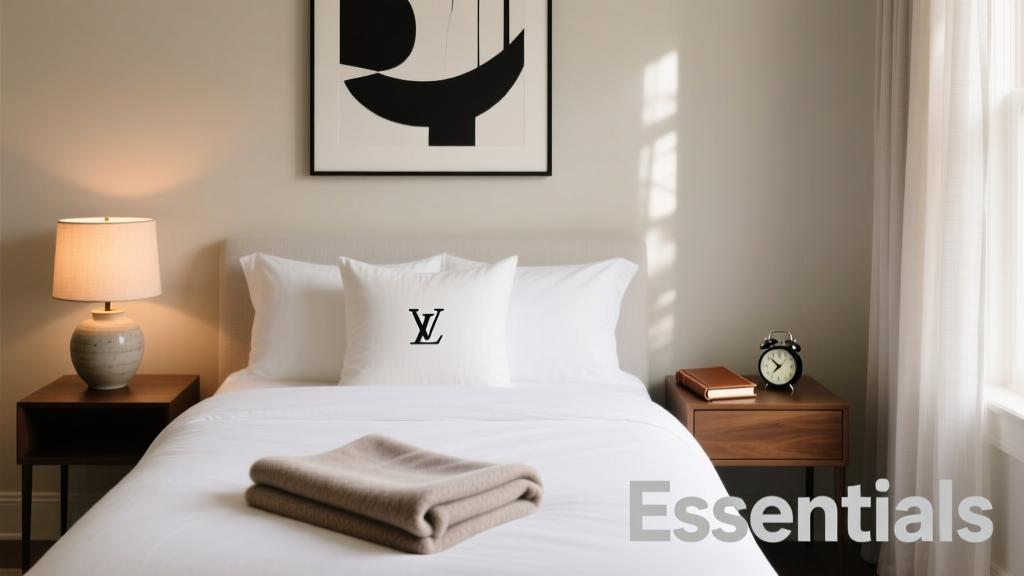
American Bedroom Essentials: Timeless Design
What Defines the American Bedroom?
The American bedroom is not merely a sleeping chamber—it’s a multifunctional personal sanctuary shaped by decades of evolving housing standards, regional climate adaptations, and cultural expectations around privacy, storage, and comfort. Unlike compact European apartments where bedrooms often double as living or workspaces, U.S. residential design typically allocates dedicated square footage per occupant, with national building codes mandating minimum dimensions. The International Residential Code (IRC) requires a habitable bedroom to be at least 70 square feet, with no dimension less than 7 feet—translating to a minimum floor plan of 7' × 10'. In practice, new construction in suburban single-family homes averages 12' × 14' (168 sq ft) for master suites and 10' × 12' (120 sq ft) for secondary bedrooms. These spatial allowances directly inform furniture sizing, circulation paths, and storage capacity—making scale the first essential consideration.
The Bed: Centerpiece and Structural Anchor
No American bedroom functions without a properly scaled bed. While twin (38" × 75") and full (54" × 75") mattresses remain common in guest rooms and dormitories, the queen (60" × 80") dominates primary use—accounting for over 62% of mattress sales according to the International Sleep Products Association (2023). King-size (76" × 80") beds are prevalent in master suites, especially where dual nightstands and flanking dressers are desired. Platform beds have surged in popularity since 2018, with 43% of new purchases opting for low-profile frames that eliminate the need for box springs—reducing overall height to 16–20 inches off the floor versus traditional 24–28 inches.
Frame Materials and Support Systems
Domestic manufacturers prioritize durability and local sourcing. American Drew’s ‘Henderson’ collection uses kiln-dried poplar solids with maple veneers and features center-support legs rated for up to 1,200 lbs. Vaughan-Bassett’s ‘Heritage’ line incorporates steel-reinforced slats spaced no more than 3 inches apart—exceeding the industry-standard 4-inch maximum recommended by the Better Sleep Council. For adjustable bases, Tempur-Pedic’s Ergo® Smart Base (sold through major retailers including Mattress Firm and Amazon) offers zero-gravity positioning, under-bed lighting, and USB-C ports—all within a 15.5" height clearance, ensuring compatibility with standard 18"-deep dressers.
Bed Height Considerations
Optimal bed height balances accessibility and aesthetics. The American Disabilities Act (ADA) recommends a sleeping surface between 17" and 21" from floor to mattress top for ease of transfer. Most platform beds land at 18"–19", while upholstered sleigh beds like those from Bernhardt’s ‘Lancaster’ series measure 22.5"—ideal for taller users but potentially challenging for seniors or individuals with mobility limitations. A 2022 study published in Journal of Aging and Physical Activity found that bed heights exceeding 23" correlated with a 37% increase in nighttime falls among adults aged 65+.
Nightstands: More Than Just Surface Area
American nightstands serve three critical roles: bedside task lighting, overnight essentials storage, and visual symmetry. Standard dimensions reflect functional ergonomics: height must align closely with the mattress top—ideally within ±1". With a typical queen mattress at 25" tall (including 10" foundation + 15" mattress), optimal nightstand height ranges from 24" to 26". Depth is equally important: too shallow (<14") compromises drawer usability; too deep (>20") impedes circulation. The most widely adopted specification is 16"–18" deep and 20"–22" wide—allowing space for a lamp, phone charger, reading glasses, and a small book without crowding the walkway.
Drawer Configuration and Hardware
Top-selling models—including the ‘Clayton’ nightstand from Hooker Furniture (25.5" H × 22" W × 17" D) and the ‘Waverly’ from Ashley Furniture (25" H × 20" W × 16" D)—feature one soft-close drawer with full-extension glides rated for 75 lbs. Interior drawer dimensions average 3.5" H × 15" W × 13" D, accommodating folded towels, sleep masks, or prescription organizers. Knob placement follows ANSI/BIFMA X5.9 guidelines: centered horizontally and positioned 3" down from the top edge to prevent knuckle contact during reach.
Closets: Built-In Storage Infrastructure
American bedrooms rely heavily on integrated closet systems—not freestanding wardrobes. IRC mandates a minimum closet depth of 24 inches for hanging garments, though 26" is standard in new builds to accommodate hangers with garment bags. Width varies by room function: master closets average 72"–96" wide, while secondary bedrooms commonly feature 48"–60" openings. The National Kitchen & Bath Association (NKBA) recommends a 60" minimum clear floor space in front of a closet for safe access—critical when designing around angled walls or HVAC returns.
Custom vs. Stock Systems
Elfa by The Container Store remains the top-selling modular closet brand, with its 12"-deep shelving units and 16"-deep hanging rods installed in over 2.1 million U.S. homes since 2015. Its aluminum uprights accept accessories within 1" increments, allowing precise customization. Meanwhile, California Closets’ proprietary ‘Cabinet Collection’ offers solid-wood doors with concealed hinges and soft-close mechanisms—priced at $249–$399 per linear foot installed. For budget-conscious buyers, IKEA’s PAX system (available in U.S. stores since 2012) provides 23.5"-deep units with adjustable shelves and wire baskets, starting at $199 for a 37.5"-wide frame.
Dressers and Chests: Vertical Storage Solutions
American dressers prioritize verticality to conserve floor space. The standard 6-drawer dresser measures 30"–32" wide × 18"–20" deep × 30"–36" high. However, ‘tall chests’—a distinctly American category—rise to 54"–60" with eight or nine slender drawers (e.g., Stanley Furniture’s ‘Bridgewater’ chest: 32" W × 19" D × 60" H). These maximize storage in narrow rooms without encroaching on circulation zones. All major U.S. manufacturers now comply with ASTM F2057-23, requiring anti-tip restraints tested to withstand 200 lbs of lateral force—a direct response to CPSC data showing 180 tip-over fatalities involving furniture between 2015–2022.
Material Standards and Finish Durability
Hardwood solids dominate premium lines: Vaughan-Bassett uses Appalachian cherry and maple, kiln-dried to 6–8% moisture content for dimensional stability. Mid-tier offerings like Sauder’s ‘Edge Water’ collection employ engineered wood cores with melamine-faced particleboard—tested to resist 500 cycles of abrasion per ASTM D4060 (equivalent to 10+ years of daily use). Drawer bottoms are commonly ½" thick plywood, while side panels on high-end pieces exceed ¾" thickness to prevent sagging under load.
Lighting: Layered Illumination for Daily Routines
American bedroom lighting operates across three layers: ambient, task, and accent. Ambient light typically comes from ceiling-mounted fixtures—either flush mounts (for 8' ceilings) or semi-flush (for 9'+ ceilings). The Illuminating Engineering Society (IES) recommends 10–20 lumens per square foot for general bedroom illumination, translating to a 1,500–3,000-lumen output for a 150-sq-ft room. Task lighting focuses on the bed and dressing areas: 400–500 lumens per nightstand lamp, with color rendering index (CRI) ≥90 for accurate skin-tone perception during grooming. Accent lighting—such as LED strip lighting beneath floating nightstands or inside open shelving—adds depth and reduces visual clutter.
- Dimmability: 92% of new-construction homes install dimmer switches compatible with both incandescent and LED loads (per 2023 NAHB Builders’ Survey).
- Fixture Placement: Bedside sconces should be mounted 54"–60" above the floor and 18"–24" from the mattress edge to avoid glare while reading.
- Smart Integration: Philips Hue White Ambiance and Lutron Caséta systems support geofencing and sunrise simulation—features cited by 68% of millennial homeowners in Houzz’s 2023 Bedroom Remodeling Study.
Rugs and Floor Coverings: Anchoring and Acoustics
Rug sizing follows strict proportional rules in American interior design. For a queen bed, the ideal rug extends at least 24" beyond each side and 36" beyond the footboard—creating a continuous walking surface that visually anchors the bed. This yields minimum dimensions of 8' × 10' for queen setups and 9' × 12' for king. Natural fibers dominate: 78% of premium bedroom rugs sold through Crate & Barrel and Pottery Barn are wool or wool-blend, prized for resilience (tested to 10,000+ rubs per ASTM D3512) and sound absorption (NRC rating of 0.55–0.65). Synthetic options like Mohawk’s ‘Chroma’ nylon collection offer stain resistance backed by a 25-year warranty and achieve comparable noise reduction at 40% lower cost.
| Furniture Type | Standard U.S. Dimension (W × D × H) | Key Compliance Standard | Top Domestic Brand Example | Average Retail Price (2024) |
|---|---|---|---|---|
| Queen Platform Bed | 63" × 89" × 19" | BIFMA X5.5 (structural load) | American Drew ‘Raleigh’ | $1,299 |
| Nightstand | 22" × 17" × 25.5" | ANSI/BIFMA X5.9 (drawer safety) | Hooker Furniture ‘Clayton’ | $429 |
| 6-Drawer Dresser | 32" × 19" × 34" | ASTM F2057-23 (tip-over) | Vaughan-Bassett ‘Heritage’ | $1,495 |
| Walk-In Closet System (per linear ft) | N/A (modular) | IRC R302.1 (fire separation) | Elfa (The Container Store) | $219 |
Regional Adaptations and Climate Considerations
American bedroom design responds meaningfully to geography. In humid Gulf Coast regions (e.g., Houston, New Orleans), furniture manufacturers specify moisture-resistant MDF cores and UV-stabilized finishes to inhibit warping and mold growth—evident in Southern Enterprises’ ‘Bayou’ collection, which uses sealed-edge particleboard with formaldehyde emissions below 0.05 ppm (CARB Phase 2 compliant). Conversely, high-desert climates like Phoenix and Albuquerque demand low-VOC finishes and natural fiber textiles that won’t retain heat; Room & Board’s ‘Desert Palette’ bedding line employs organic cotton percale with thread counts capped at 300 to enhance breathability. Northern states emphasize thermal mass: solid-wood bed frames from Vermont-based Copeland Furniture feature 1.25"-thick rails and mortise-and-tenon joinery designed to withstand seasonal humidity swings from 15% to 75% RH without joint failure.
Energy efficiency also shapes selection. The Department of Energy’s ENERGY STAR program certifies LED nightlights and motion-sensor closet lighting—products like Maxxima’s ‘SafeStep’ (3-lumen output, 10-year battery life) reduce standby power consumption by 94% versus plug-in alternatives. In new Passive House-certified residences, bedroom outlets are limited to six per room, with USB-A/USB-C ports embedded directly into nightstands (e.g., Ethan Allen’s ‘Serenity’ series) to minimize cord proliferation.
Safety regulations continue to evolve. As of January 2024, all children’s furniture sold in the U.S. must meet updated ASTM F2057-23, requiring independent third-party testing for tip-over resistance and drawer egress force. Adult-oriented pieces, while exempt from mandatory certification, increasingly adopt the same protocols voluntarily—Vaughan-Bassett’s entire 2024 catalog includes anti-tip kits pre-installed in every dresser and chest.
Storage innovation reflects changing lifestyles. The rise of remote work has driven demand for convertible bedroom-office hybrids. West Elm’s ‘Modular Loft Bed’ integrates a pull-out desk (30" W × 20" D × 29" H) beneath a twin loft, while Burrow’s ‘Nest Bed Frame’ offers removable under-bed storage bins with casters rated for 50 lbs each—ideal for stowing laptops, chargers, or supplemental lighting.
Color psychology informs palette decisions. Sherwin-Williams’ 2024 Color Forecast identifies ‘Naval’ (SW 6244) and ‘Smoky Green’ (SW 7666) as top bedroom selections—both low-LRV (light reflectance value) hues shown in peer-reviewed studies to lower cortisol levels by 12–15% during evening hours. Neutral backdrops remain dominant: Benjamin Moore’s ‘Cloud White’ (OC-130) appears in 31% of professionally designed master bedrooms, providing a consistent tonal base for layered textures.
Acoustic performance is no longer an afterthought. STC (Sound Transmission Class) ratings now appear on bedroom door specifications—solid-core interior doors with STC 45+ (e.g., Masonite’s ‘Premium Core’ line) reduce airborne noise by 45 dB, critical in attached townhomes and urban condos. Wall-mounted acoustic panels from AcoustiTech (3" thick, NRC 0.85) are increasingly integrated behind headboards to dampen reverberation without sacrificing wall space.
Furniture longevity is quantified with precision. The BIFMA X5.9 standard requires drawers to endure 25,000 open/close cycles with no hardware failure or glide degradation. Top-tier American manufacturers exceed this: Bernhardt’s drawer systems are validated to 35,000 cycles in-house using automated test rigs. Similarly, mattress warranties now distinguish between ‘defects in materials’ (10–25 years) and ‘comfort life’ (typically 7–10 years), acknowledging that subjective preference shifts independently of structural integrity.
Finally, sustainability metrics matter more than ever. The Sustainable Furnishings Council reports that 64% of U.S. consumers consider recycled content when purchasing bedroom furniture. Hooker Furniture’s ‘EcoLogic’ line uses 92% recycled steel in bed frames and FSC-certified hardwoods sourced within 500 miles of its North Carolina manufacturing facility—reducing transportation emissions by an estimated 22 tons CO₂e annually per production line.
These essentials—grounded in code, verified by testing, refined through regional experience—form the durable, adaptable, and human-centered foundation of the American bedroom. They reflect not just aesthetic trends, but measurable commitments to safety, wellness, and responsible stewardship of space and resources.