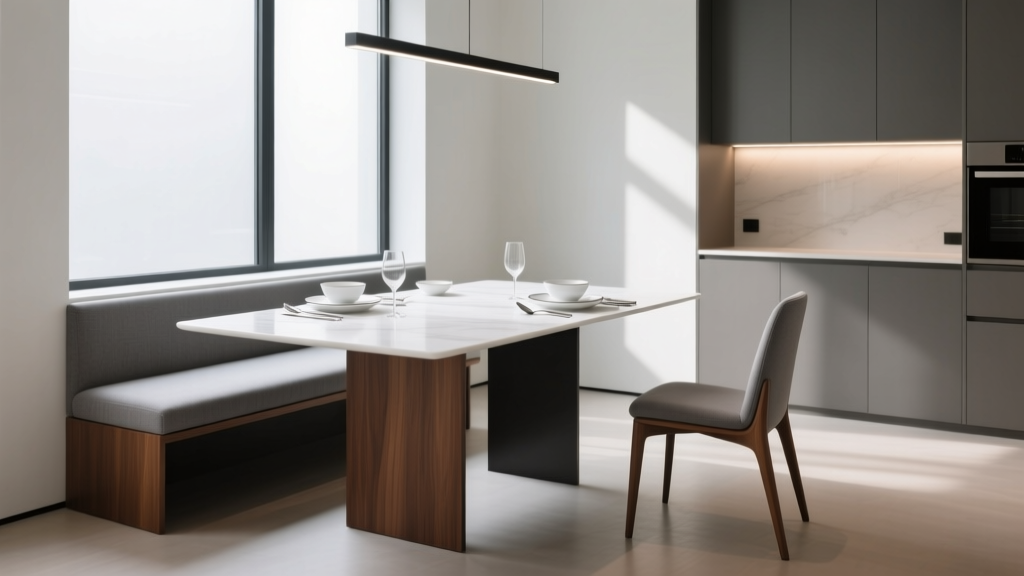
Choosing between a dining bench and individual chairs involves more than aesthetics. The right choice affects how many people you can seat, how the room flows when people move around the table, and how flexible your dining space is for different occasions.
Space Efficiency Compared
A bench slides completely under the table when not in use, eliminating the footprint that chairs occupy even when pushed in. A standard dining chair needs about 20 by 20 inches of floor space, including clearance to slide back. A bench that tucks under the table takes up zero floor space when stored, which matters in narrow dining rooms or open-plan spaces where the dining area competes with the living area.
For seating capacity, a 60-inch bench comfortably seats three adults — the same as three chairs but with no gaps between seats. In tight situations, a bench can squeeze in an extra person at the end because there are no chair legs or arms blocking the space.
Comfort and Ergonomics
Individual chairs win on comfort for long meals. Each person gets their own defined space with back support, and they can adjust their distance from the table independently. Benches force sitters closer together and typically lack back support unless you choose a bench with a backrest — which then cannot slide under the table.
For families with young children, benches are often preferred because kids naturally sit closer together and the bench eliminates the tipping hazard of a chair. Older adults and guests with mobility concerns generally prefer individual chairs with arm support and the ability to rise without needing to slide sideways off a bench.
Flexibility for Different Occasions
Chairs can be moved around the house as needed — extra seating for the living room during parties, a desk chair in a pinch, or rearranged for a larger dining table. Benches are tied to the table they fit. However, benches excel at accommodating variable numbers of guests — a bench that seats three can stretch to four for a casual meal, which a set of individual chairs cannot do.
A popular hybrid approach uses chairs on one side of the table and a bench on the other. This gives you the best of both worlds — individual seating for guests who prefer it, and flexible bench seating for the family side. It also creates visual interest by breaking the matching-set look.
Cost Comparison
A quality dining bench costs 200 to 600 dollars and seats two to three people — roughly 100 to 200 dollars per seat. Individual dining chairs range from 100 to 500 dollars each. For a table that seats six, you would spend 600 to 3,000 dollars on chairs versus 400 to 1,200 dollars on two benches. The bench option typically saves 30 to 50 percent.
Material and Maintenance
Benches with upholstered seats are harder to clean than wood or metal chairs, especially in households with young children. A solid wood bench wipes clean easily but lacks the comfort of padding. Chairs with removable, washable seat covers offer a practical middle ground. For outdoor dining, metal or treated wood benches weather better than most individual outdoor chairs.
Common Mistakes to Avoid
- Choosing a bench that is too long: The bench should be 2 to 4 inches shorter than the table on each side so it slides under without hitting the table legs.
- Ignoring bench height: The bench seat should be 10 to 12 inches below the tabletop, matching standard chair seat-to-table ratios. A bench that is too low or high makes eating uncomfortable.
- Buying backless benches for long meals: Without back support, people shift and fidget after 30 to 45 minutes. Reserve backless benches for casual, shorter meals.
- Forgetting about table legs: Some table designs have legs positioned where a bench cannot slide underneath. Check the table base design before committing to a bench.
Making the Final Decision
If space is your primary constraint and meals are typically casual, a bench saves significant floor area and money. If comfort for long dinners and guest hospitality matter more, individual chairs are the better choice. The hybrid approach — chairs on one side, bench on the other — is increasingly popular for good reason.