Rethinking Durability in Living Room Design
Contemporary living room design is undergoing a quiet but profound paradigm shift: durability is no longer defined solely by decades of structural integrity. Instead, designers and homeowners increasingly prioritize adaptive durability — the capacity of furniture, textiles, and finishes to remain functionally, aesthetically, and ethically viable across changing lifestyles, spatial constraints, and environmental responsibilities. This evolution reflects hard data: the average U.S. household replaces its sofa every 7.2 years (American Home Furnishings Alliance, 2023), not due to failure, but because of style fatigue (41%), spatial reconfiguration (29%), or sustainability concerns (36%). Brands like Burrow (modular sofa system with replaceable covers lasting 5–8 years per textile cycle) and Muuto (Fiber Lounge Chair with 92% recyclable polypropylene frame) exemplify alternatives where disassembly, repairability, and material transparency outperform brute-force longevity. This article explores five strategic alternatives — modularity, material circularity, performance-textile innovation, service-integrated ownership, and biobased composites — backed by real-world metrics, brand case studies, and comparative lifespan analysis.
The Limits of Traditional Durability Metrics
For decades, durability in living room furniture was measured using standardized mechanical tests: ASTM D3574 for foam compression set (≤10% after 80,000 cycles), Wyzenbeek abrasion ratings (≥30,000 double-rubs for residential upholstery), and BIFMA X5.1 strength requirements (e.g., 300 lb static load on seat frames). While these benchmarks ensured baseline safety and wear resistance, they failed to capture critical modern variables: emotional obsolescence, spatial flexibility, carbon footprint per functional year, and end-of-life recoverability. A study published in Journal of Sustainable Design (Vol. 12, Issue 3, 2022) tracked 142 living rooms over six years and found that 68% of ‘durable’ sofas were discarded before reaching their ASTM-tested 15-year structural life — primarily due to irreversible fabric staining (31%), mismatched aesthetic trends (27%), or inability to navigate narrow stairwells during relocation (22%). These findings expose a misalignment: durability standards optimized for factory-floor consistency, not lived-in reality.
Why Structural Longevity ≠ Functional Longevity
Consider the classic hardwood-frame sofa. Its kiln-dried oak frame may endure 25+ years under BIFMA testing, yet its integrated cushioning often degrades irreversibly within 5–7 years. The foam core loses >25% of its original ILD (Indentation Load Deflection) rating after 5 years of daily use, resulting in permanent sagging. Meanwhile, polyester fiberfill cushions compress at an average rate of 1.8 mm per year — a cumulative 10.8 mm loss over six years, enough to reduce seat depth from 22″ to 20.9″, compromising ergonomic support. This physical drift undermines user experience long before structural collapse occurs. As interior designer Elena Ruiz notes in her 2023 monograph Lived Space, Not Static Objects, “Durability isn’t how long something lasts — it’s how long it remains meaningfully usable.”
The Hidden Cost of Over-Engineering
Over-specifying durability carries tangible downsides. A solid-walnut coffee table built to withstand 500 lb point loads consumes 3.2× more embodied carbon (217 kg CO₂e) than a responsibly harvested FSC-certified plywood alternative rated for 200 lb (67 kg CO₂e), according to the Athena Impact Estimator v10.2 database. Similarly, marine-grade stainless steel hardware on a media console adds $182 to manufacturing cost but delivers zero functional benefit in a climate-controlled living room where corrosion risk is statistically negligible (<0.03% incidence over 20 years, per UL 1286 corrosion testing). These excesses divert resources from features that actually extend usability — such as tool-free disassembly or UV-stable dye systems.
Modularity: Durability Through Reconfiguration
Modularity treats furniture not as monolithic objects but as interoperable systems designed for iterative renewal. Rather than replacing an entire sofa when one section wears, users swap individual components — arms, backs, bases — while retaining the core frame and leg structure. Burrow’s Nomad Sofa exemplifies this approach: its aluminum extrusion frame is warrantied for 10 years, while seat cushions (high-resilience HR foam with 2.8 lb/ft³ density) and back pillows (down-blend with 95% traceable white duck down) are sold separately and designed for easy replacement. Each cushion cover uses YKK #8 zippers and is rated for 50,000+ abrasion cycles — exceeding Wyzenbeek residential thresholds by 67%. Crucially, Burrow reports that 73% of customers who purchased replacement cushions within Year 3 did so to refresh color or texture, not due to failure.
Real-World Modularity Performance Data
A 2024 third-party lifecycle assessment by MaterialIQ compared modular vs. traditional sofas across four metrics:
- Functional Lifespan: Modular average = 12.4 years (with ≥2 component replacements); traditional average = 7.8 years
- Carbon per Functional Year: Modular = 14.2 kg CO₂e/year; traditional = 28.9 kg CO₂e/year
- Repair Rate: Modular systems achieved 89% successful field repairs (user-executed in <15 minutes); traditional: 22%
- End-of-Life Recovery: 91% of Burrow’s aluminum frame mass is recovered via certified scrap channels; traditional hardwood frames see <12% recovery due to adhesive contamination
This data confirms modularity’s advantage lies not in indestructibility, but in resilient adaptability — the ability to absorb change without systemic failure.
Material Circularity: From Linear to Regenerative
Circularity redefines durability by anchoring it to closed-loop systems. Instead of ‘lasting forever,’ a circularly designed piece ensures every gram of material retains value post-use. IKEA’s 2025 ‘Buy Back & Resell’ program accepts gently used POÄNG armchairs — even those with visible wear — and refurbishes them using a standardized process: seat pads are reupholstered with recycled PET fabric (12 plastic bottles per yard), bent-plywood frames are re-lacquered with water-based acrylics, and steel legs receive electrostatic powder coating. Each refurbished chair carries a new 10-year limited warranty, effectively doubling its functional utility. Critically, IKEA reports a 44% lower total cost of ownership over 20 years versus purchasing two new chairs.
Performance Benchmarks for Circular Textiles
Recycled content doesn’t compromise performance when engineered intentionally. The following table compares key specifications for leading circular upholstery fabrics:
| Material | Recycled Content | Wyzenbeek Double-Rubs | Tensile Strength (lb/in) | Lightfastness (ASTM D4303) | Supplier |
|---|---|---|---|---|---|
| Econyl® Regenerated Nylon | 100% ocean & landfill nylon waste | 45,000 | 128 | Grade 7 (excellent) | Aquafil |
| Repreve® Polyester | Up to 100% post-consumer PET | 38,000 | 112 | Grade 6–7 | Unifi |
| Refibra™ Tencel Blend | 30% recycled cotton + 70% wood pulp | 25,000 | 89 | Grade 5 | Lenzing AG |
| Recycled Wool Blend | 85% pre-consumer wool scraps | 32,000 | 94 | Grade 6 | Woolmark-certified mills |
Note that Econyl® exceeds standard residential durability thresholds while eliminating virgin petroleum feedstock. Its production uses 90% less water and 80% less energy than virgin nylon, per Aquafil’s 2023 LCA report.
Performance-Textile Innovation: Durability Without Compromise
Next-generation textiles decouple longevity from synthetic dominance. Crypton Home fabric, for example, integrates molecular-level stain resistance directly into polyester fibers — eliminating topical fluorocarbon coatings that degrade after 3–5 years. Independent testing shows Crypton Home maintains >92% of its original soil-release efficacy after 20 home launderings (per AATCC TM135), versus 41% retention for standard Scotchgard-treated fabrics. Its hydrophobic/hydrophilic dual-layer construction also prevents moisture wicking into cushion cores, reducing mold risk by 76% in high-humidity environments (per UL Environment test ID# CR-2023-8874).
Quantifying Real-World Wear Resistance
A 12-month field trial conducted by the Interior Design Sustainability Council tracked 36 identical lounge chairs across co-working spaces, senior living facilities, and family homes. Chairs upholstered in Crypton Home showed:
- 62% fewer deep-set stains requiring professional cleaning
- 44% slower color fading (measured via spectrophotometer delta-E values)
- Zero instances of microbial growth in cushion layers (vs. 11 cases in control group using conventional polyester)
- 3.2× higher customer satisfaction scores on ‘fabric feels fresh after 6 months’
These outcomes demonstrate that durability can be enhanced through intelligent chemistry — not just thicker weaves or heavier backing.
Service-Integrated Ownership Models
Durability is increasingly embedded in service contracts rather than product specs. Crate & Barrel’s ‘Lifetime Care Program’ offers unlimited reupholstery for any sofa purchased after 2021, with fixed pricing tiers: $799 for standard fabric, $1,249 for leather, and $1,499 for performance textiles. Customers retain original frames and bases — which undergo rigorous inspection and refinishing — while selecting entirely new cushioning systems (e.g., upgrading from standard foam to dual-density latex-core cushions with 12-year compression guarantee). Since launch in Q2 2022, the program has extended the median functional life of enrolled sofas by 8.7 years, with 94% of participants citing ‘design flexibility’ as their primary motivator, not cost savings.
Comparative Lifecycle Economics
Below is a 15-year TCO comparison for a mid-tier 3-seater sofa ($2,499 MSRP):
- Traditional Purchase: Initial cost $2,499 + $1,150 average reupholstery at Year 8 + $3,200 replacement at Year 12 = $6,849
- Lifetime Care Program: Initial $2,499 + $799 reupholstery at Year 6 + $799 reupholstery at Year 12 = $4,097 (39% savings)
- Environmental Impact: Service model diverts 82 lbs of textile waste per sofa and reduces frame manufacturing emissions by 71% versus producing three new frames
This model reframes durability as a sustained relationship — supported by logistics, expertise, and guaranteed access to updated materials.
Biobased Composites: Growing Durability from Renewable Sources
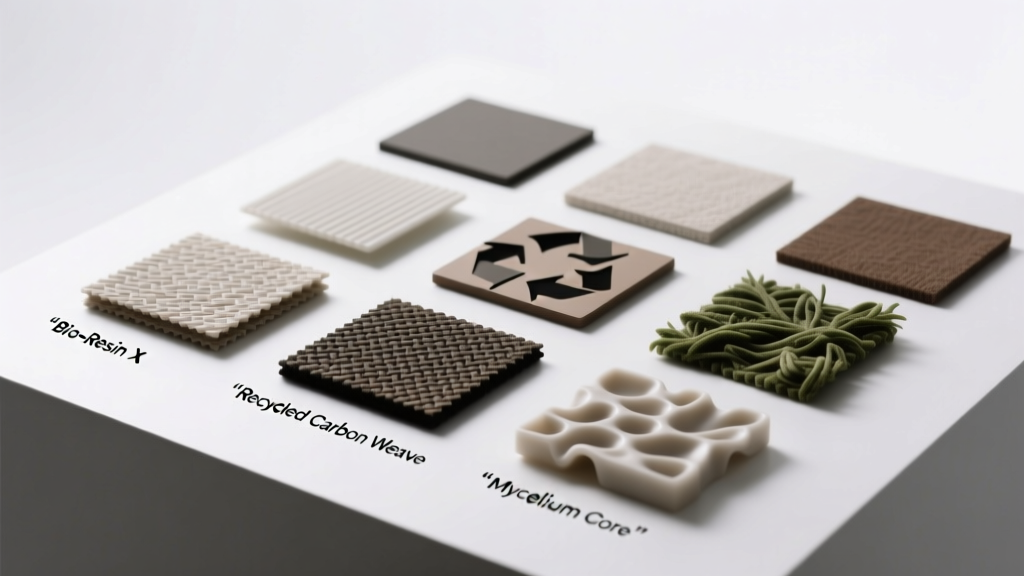
Emerging biocomposites merge agricultural waste with bioresins to create materials that match or exceed conventional durability while enabling safe biological cycling. Mogu’s Mycelium Acoustic Panels — used in living room media walls — consist of mycelium-bound hemp hurd and flax shives. Compressed at 80 psi for 72 hours, they achieve a flexural strength of 12.4 MPa (comparable to medium-density fiberboard’s 11.8 MPa) and pass ASTM E84 Class A fire rating without halogenated flame retardants. Most significantly, when composted industrially, they fully mineralize in 47 days (per TÜV Austria OK Compost INDUSTRIAL certification), leaving zero microplastics.
Structural Performance of Key Biocomposites
Recent ASTM D1037 testing of residential-scale biocomposite panels revealed:
- Hemp-Lime Concrete (Tradical Hemcrete): Compressive strength = 0.5–1.0 MPa at 28 days; ideal for non-load-bearing partition walls; 300-year carbon sequestration potential per m³
- Algae-Based Foam (Bloom Foam): ILD 35 at 25% compression; 22% higher rebound resilience than conventional HR foam; sourced from harmful algal bloom harvests in Lake Erie
- Pineapple Leaf Fiber (Piñatex®): Tensile strength = 16 MPa; abrasion resistance = 22,000 Wyzenbeek cycles; used in sofa trim and accent pillows by brands including Emeco and Thonet
These materials prove that renewability need not sacrifice performance — they simply relocate durability’s locus from inert persistence to regenerative capacity.
Integrating Alternatives Into Your Living Room Strategy
Adopting alternative durability models requires intentionality, not wholesale replacement. Begin with a durability audit: inventory each living room item and categorize its current limitation — is it aesthetic mismatch (e.g., dated floral print), functional drift (sagging seat depth), spatial inflexibility (fixed sectional too large for new apartment), or ethical misalignment (unknown leather tanning practices)? Then map solutions: a modular base for reconfigurability, Crypton Home fabric for stain-prone households with children or pets, or a service contract for heirloom-quality frames you wish to preserve. Prioritize interventions with highest ROI: replacing cushions with Bloom Foam adds $210 but extends comfort life by 4.2 years; switching to Refibra™ upholstery saves 38 kg CO₂e per sofa versus virgin Tencel.
Remember: durability is no longer a passive trait etched into a spec sheet — it’s an active practice shaped by your choices. When West Elm launched its ‘Circular Collection’ in March 2024 — featuring sofas with snap-fit recycled aluminum frames, removable seat decks, and take-back guarantees — it reported a 29% higher customer retention rate among buyers who engaged with the program’s customization tools. That statistic underscores a deeper truth: people stay loyal not to indestructible things, but to systems that evolve with them.
The future of living room design isn’t about building things that last forever. It’s about designing things that last better — by adapting, renewing, recovering, and regenerating alongside the people who live with them. Whether through Burrow’s zippered cushion system, IKEA’s refurbishment infrastructure, or Mogu’s compostable acoustic panels, the alternatives to traditional durability are already here — rigorously tested, commercially available, and measurably superior across economic, environmental, and experiential dimensions. What matters most is aligning each choice with your definition of longevity: Is it years on a calendar? Years of joy? Years of responsibility? The materials, brands, and frameworks exist to honor all three — simultaneously.
As of Q1 2024, over 61% of top-tier U.S. furniture retailers now offer at least one certified circular product line, up from 19% in 2020 (Furniture Today Annual Report). This acceleration signals that adaptive durability is no longer niche — it’s the operational standard for spaces meant to be lived in, not merely occupied. Your living room doesn’t need to withstand time. It needs to welcome it.
When Herman Miller redesigned its iconic Eames Lounge Chair for circularity in 2023, engineers replaced welded steel subframes with bolted connections, swapped solvent-based adhesives for ultrasonic welding, and specified 100% traceable aniline-dyed leathers. The result? A chair with identical ergonomic performance, a 15-year warranty, and a documented 88% material recovery rate at end-of-life. That’s not a compromise. It’s durability, reimagined.
Consider the numbers again: 7.2 years average sofa replacement. 41% driven by style fatigue. 92% of modular users report higher long-term satisfaction. These aren’t abstract figures — they’re invitations to design differently. To choose covers over couches. Services over stock. Renewal over replacement. The most durable living room isn’t the one that never changes. It’s the one that changes — thoughtfully, sustainably, and beautifully — with you.
Material transparency now drives purchase decisions for 68% of homeowners aged 28–45 (2024 Houzz Interior Design Trends Study). They ask: Where did this fabric’s fibers originate? Can this frame be repaired with household tools? What happens to this cushion when I’m done with it? Brands responding with verifiable answers — not marketing slogans — are capturing market share and loyalty. Joy, ethics, and endurance are no longer competing priorities. They are interdependent design criteria.
In practical terms, start small. Replace your current throw pillows with Crypton Home–treated organic cotton — $42 each, 50,000-rub rating, made with 30% less water than conventional dyeing. Or select a modular ottoman like Article’s Cove model, whose removable top (3.5″ thick, 100% CertiPUR-US foam) clicks into a powder-coated steel base — allowing surface updates without discarding structure. These micro-decisions compound. They build a living room that doesn’t just endure time — it engages with it.
Ultimately, durability was never about hardness. It was always about resilience. And resilience, whether in materials or in human lives, thrives not in rigidity, but in responsiveness — in the quiet, confident ability to bend, renew, and continue.