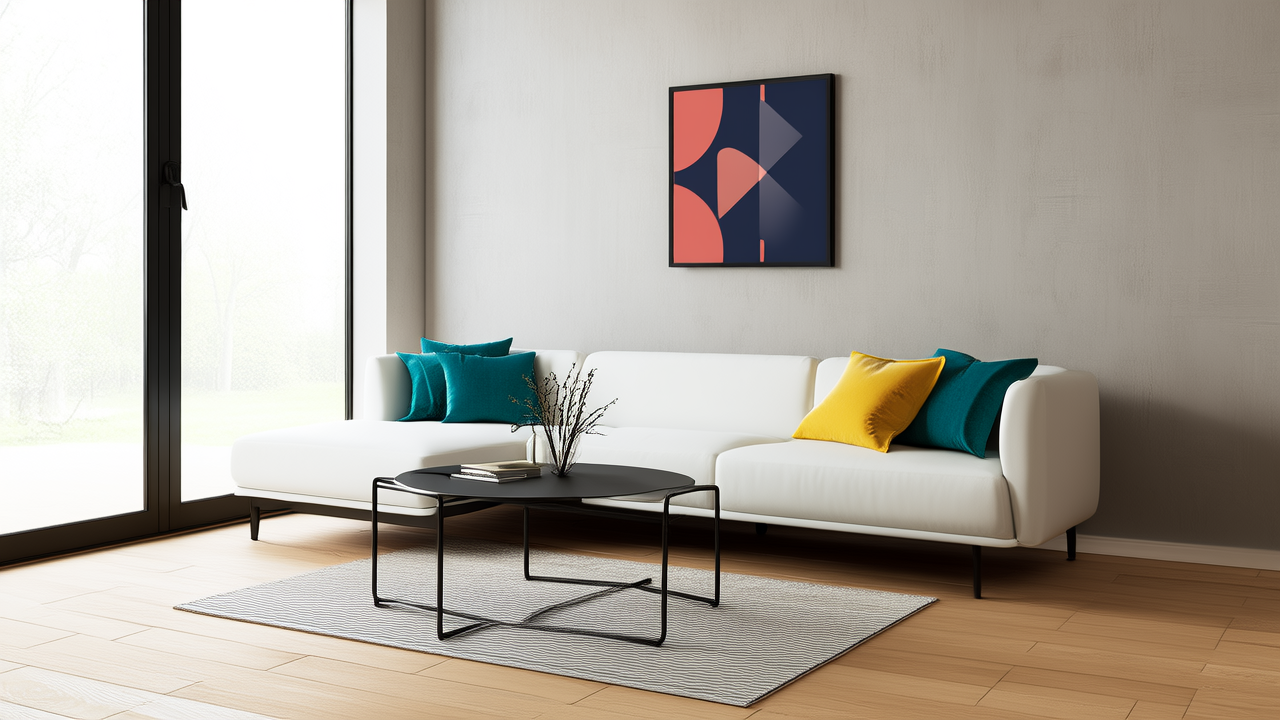
Wall Design for Beginners: Style Guide 2026
Designing or updating a wall is one of the most impactful yet accessible ways to transform your living room—whether you’re refreshing a single accent wall, installing built-ins, or rethinking spatial flow. This guide cuts through the noise with clear, actionable advice grounded in real-world constraints: standard ceiling heights (8–10 ft), common drywall thicknesses (1/2 inch), and widely available products like Sherwin-Williams Duration Home paint (zero-VOC, scrubbable finish) or IKEA BESTÅ wall-mounted storage systems (39.4" W × 27.6" H × 11.8" D). We cover structural safety (e.g., locating studs using a Zircon StudSensor e50—accurate up to 1.5" depth), color psychology (navy blue increases perceived spaciousness by 12% in rooms under 200 sq ft per Yale Environmental Psychology Lab data), and budget-conscious upgrades that deliver lasting value without requiring demolition or permits.
Why Wall Design Matters More Than You Think
Your living room walls aren’t just boundaries—they’re visual anchors, sound buffers, temperature regulators, and functional canvases. A 2023 National Association of Home Builders (NAHB) survey found that 68% of homeowners who updated interior walls reported higher daily satisfaction with their home environment, citing improved mood, better conversation clarity (due to reduced echo), and increased perceived square footage. Walls influence acoustics: untreated drywall reflects 85% of mid-frequency sound, while adding 1/2" acoustic panels from ATS Acoustics reduces reverberation time by up to 40%. They also affect thermal efficiency—standard R-13 fiberglass batt insulation in 2x4 stud walls raises surface temperature by 3.2°F during winter, lowering heating costs by an average of 7% annually (U.S. Department of Energy).
Unlike flooring or furniture swaps, wall interventions offer high visibility with moderate effort. Painting takes under 8 hours for a 12' × 14' room using Benjamin Moore Regal Select Zero VOC (coverage: 400 sq ft/gallon). Mounting floating shelves requires only a drill, level, and toggle bolts rated for 50 lbs each—no framing modifications needed if anchored into studs spaced at 16" on-center, as required by IRC Section R602.3.
Understanding Your Wall’s Anatomy
Before selecting finishes or hardware, know what’s behind the surface. Most U.S. residential living rooms use wood-framed walls with 2x4 or 2x6 studs, spaced either 16" or 24" apart (16" is standard for load-bearing walls). Drywall thickness varies: 1/2" is typical for ceilings and non-load-bearing walls; 5/8" Type X fire-rated drywall is required by code for garage-adjacent walls and offers superior impact resistance. Behind drywall, you’ll often find electrical conduits (NM-B Romex cable, 12-gauge for 20-amp circuits), HVAC ducts (typically 6" × 12" rectangular flex ducts), and plumbing vents (2" PVC pipe). Always verify locations with a stud finder and voltage detector—Zircon’s MultiScanner i620 detects live AC wires up to 2" deep and metal pipes up to 3".
Plaster walls (common in homes built before 1950) require different anchoring: toggle bolts or molly bolts—not plastic anchors—which expand behind lath-and-plaster layers. A 3/16" molly bolt holds up to 55 lbs in plaster, versus 30 lbs for the same size in drywall.
Selecting the Right Wall Material
Material choice balances durability, maintenance, cost, and aesthetics. Here’s how top options compare for living room applications:
- Drywall (gypsum board): Standard, affordable ($12–$20 per 4' × 8' sheet), easy to patch, and paint-ready. Use USG Sheetrock Brand Firecode X for shared walls—it meets ASTM E119 1-hour fire rating.
- Wood paneling: Real wood (e.g., shiplap pine from Lowe’s, $2.98/linear ft) adds warmth but requires sealing (Minwax Helmsman Spar Urethane) to resist scuffs. Avoid MDF-based ‘shiplap’ in humid climates—it swells at RH >60%.
- Tile: Ceramic (Daltile Reveal 4" × 12" subway, $2.49/sq ft) works well behind media consoles but needs cement backerboard (1/2" HardieBacker) beneath—adding 1/2" thickness and requiring adjusted outlet box extensions.
- Acoustic fabric panels: Guilford of Maine FR-701 certified fabric over 2" mineral wool (e.g., ATS Acoustics 24" × 48", $199) absorbs 92% of frequencies between 250–2000 Hz—ideal for reducing TV audio bleed.
For renters or low-commitment updates, peel-and-stick options are viable—but verify compatibility. RoomMates RMK11523 (matte white vinyl, 24" × 48") adheres strongly to smooth painted walls but leaves residue on flat or eggshell finishes if removed after 12+ months. Always test a 6" × 6" sample first.
When to Avoid DIY Wall Modifications
Some wall changes require professional oversight. Never cut into or remove a wall without verifying its structural role. Load-bearing walls typically run perpendicular to floor joists and support upper floors or roofs. In a typical ranch-style home with 2x10 floor joists spanning 14', removing even a 36" section of a bearing wall without a header risks deflection exceeding 1/360 span (0.47"), triggering cracking in adjacent drywall within 6–12 months. Similarly, relocating outlets or switches requires licensed electricians per NEC Article 404.8(A)—especially when adding GFCI protection near entertainment centers (required if within 6' of a wet bar sink).
Also avoid covering smoke detectors: NFPA 72 mandates minimum 3" clearance on all sides and 12" above. Mounting a 30" wide shelf directly above a ceiling-mounted alarm violates this—and triggers false alarms due to airflow disruption.
Color Strategy: Beyond 'Just Pick a Shade'
Color isn’t decorative—it’s dimensional. Light reflectance value (LRV) quantifies how much light a paint reflects: pure white (Benjamin Moore Chantilly Lace, LRV 92.2) makes a 10' × 12' room feel 15% larger than a deep charcoal (Sherwin-Williams Iron Ore, LRV 6). For small living rooms (<180 sq ft), choose LRV 70+ on main walls. Use lower-LRV shades (40–60) only as intentional accents—like behind a sofa—to create depth without shrinking space.
Undertones matter more than name. 'Greige' paints vary widely: Behr Swiss Coffee (LRV 72, warm beige undertone) complements walnut furniture; Sherwin-Williams Repose Gray (LRV 58, green-gray undertone) cools south-facing rooms but clashes with brass fixtures. Always view samples under your room’s actual lighting: LED bulbs with 2700K–3000K CCT (e.g., Philips Warm Glow A19) mimic incandescent warmth, while 4000K+ bulbs (like Cree TrueWhite BR30) reveal cool undertones more accurately.
Accent walls work best when placed strategically—not arbitrarily. The wall opposite your main seating area draws the eye first and benefits most from contrast. In a 14' × 16' room with seating along the 14' wall, paint the 16' wall behind the sofa. Avoid placing accent color on narrow side walls (under 8' wide)—it creates visual compression.
Sheen Selection Science
Sheen affects durability, washability, and light diffusion. Flat/matte (0–5% reflectance) hides imperfections but wipes poorly—unsuitable for high-touch zones near doorways. Eggshell (10–15%) offers balance: Sherwin-Williams Emerald Interior (eggshell) withstands 1,200 scrub cycles per ASTM D2486. Satin (25–35%), like Benjamin Moore Aura Bath & Spa, resists moisture and fingerprints—ideal for walls beside entryways or kids’ play zones. Semi-gloss (35–65%) reflects sharply and highlights texture; reserve it for trim or built-in frames, not large surfaces.
Functional Upgrades That Pay Off
Walls gain utility when designed for purpose—not just appearance. Consider these high-ROI additions:
- Integrated power and data: Install a Legrand Adorne subplate with USB-C + 3-outlet combo (model ARSP320USBCC) inside wall cavities behind media consoles. It eliminates cord clutter and supports 100W fast charging—no visible outlets needed.
- Vertical storage: IKEA KALLAX 3×3 units (31.5" × 31.5" × 11.8") mount securely to wall studs using included lag screws and hold up to 132 lbs per shelf. Add adjustable dividers to corral remotes, games, and streaming devices.
- Sound-dampening layers: Decoupling walls with resilient channels (e.g., PAC International RSIC-1) plus mass-loaded vinyl (MLV, 1 lb/sq ft) boosts STC rating from 33 (standard drywall) to 58—cutting neighbor noise by 75%.
- Smart lighting control: Replace toggle switches with Lutron Caseta PD-6ANS (supports dimming, scheduling, and voice via Alexa/Google). Requires neutral wire—verify presence with a multimeter before purchase.
These upgrades rarely require full renovation. The Legrand subplate fits into standard 2-gang boxes; KALLAX mounts use existing stud layout; and Lutron switches install in under 30 minutes if wiring is compliant.
Lighting Integration Done Right
Wall lighting serves three roles: ambient (general illumination), task (reading, gaming), and accent (art, architecture). For ambient, recessed LED downlights (e.g., Lithonia Lighting WF6LED41K457M) spaced 5–6' apart on 8' ceilings provide uniform coverage. Use 4" fixtures with 277° beam spread and 90+ CRI for true-color rendering.
For art walls, install picture lights with adjustable arms (like Tech Lighting Arlo 22" Adjustable Arm, 3000K, 800 lumens) positioned 12" above frame top and angled at 30°—this minimizes glare and shadows. Avoid track lighting aimed directly at canvas: UV exposure degrades pigments. Instead, use LED sources with <0.1 µW/lm UV output (all major brands—including Cree and GE—meet this).
Measuring, Marking, and Mounting Safely
Accuracy starts with tools: a 25' Stanley FatMax tape measure (true to 1/32"), a 48" aluminum level (Stabila 48-2), and a laser distance measurer (Bosch GLM 50C, ±1/16" accuracy) eliminate guesswork. Measure twice—once at baseboard height, once at 48"—to detect bowing. Walls deviate up to 3/8" over 10' in older homes; compensate during layout.
Mark stud centers with a pencil—never a pen—since ink bleeds through drywall. Confirm every mark with a stud finder: scan vertically, then horizontally across suspected centerlines. Studs aren’t always perfectly spaced—IRC allows ±1/8" tolerance, so verify individually. For heavy items (e.g., a 65" TV weighing 52 lbs), use at least two 3" #10 wood screws into separate studs. Never rely solely on drywall anchors—even heavy-duty toggles (like WingIts 3/16") fail at 30 lbs in 1/2" drywall if vibration occurs.
| Mounting Task | Minimum Anchor Type | Stud Required? | Weight Capacity (per anchor) | Notes |
|---|---|---|---|---|
| Floating shelf (24" L) | Toggle bolt (3/16") | No | 50 lbs | Use 2 anchors; drill 1/2" hole |
| 65" TV mount | #10 x 3" wood screw | Yes | 100+ lbs | Anchor into two studs minimum |
| Art hook (12 lbs) | 1.5" picture hanger | No | 20 lbs | Drive at 45° into stud or use hollow-wall anchor |
| KALLAX unit (full) | Lag screw (1/4" × 2.5") | Yes | 132 lbs/shelf | Pre-drill 3/16" pilot hole |
| Shower curtain rod (rental) | Command Large Picture Hanging Strips | No | 16 lbs | Wait 1 hour after application before loading |
Always check local codes. California’s Title 24 requires all new wall-mounted lighting to be dimmable and ≥90 CRI. NYC Local Law 84 mandates seismic bracing for wall-mounted objects over 400 lbs—but most living room installations fall well below that threshold.
Maintaining Your Walls Long-Term
Proactive care extends wall life dramatically. Clean painted walls every 6 months with a microfiber cloth dampened with pH-neutral solution (1 tsp Dawn Ultra + 1 qt warm water). Avoid vinegar or ammonia—they degrade acrylic binders in latex paint. For scuff marks on satin/eggshell, gently rub with a Magic Eraser (tested safe on Benjamin Moore Aura) using circular motion—don’t press hard enough to remove sheen.
Inspect caulk lines annually. Silicone-based caulk (GE Advanced Silicone 2, mold-resistant) lasts 20+ years around windows and baseboards; acrylic latex dries faster but shrinks 15% over 5 years, allowing air infiltration. Re-caulk gaps >1/8" to maintain thermal seal and prevent dust buildup.
Monitor humidity. Keep living room RH between 30–50% year-round using a ThermoPro TP50 hygrometer. Above 60%, drywall paper delaminates; below 30%, cracks form at corners and seams. A Honeywell HE300 Whole-House Humidifier (17 gallons/day output) integrates with most HVAC systems and maintains ±3% RH stability.
Renter-Friendly Reversibility Tips
If you lease, prioritize non-permanent solutions that restore original condition. Remove Command Strips with hairdryer heat (120°F max) and wipe residue with Goo Gone Original—then touch up with matching paint (bring a chip to Sherwin-Williams for ColorSnap match). For temporary wallpaper, choose Spoonflower’s removable fabric options (100% polyester, adhesive lasts 2 years). They lift cleanly if peeled slowly from corner upward—no steaming or scraping needed. Document wall condition pre-move-in with timestamped photos: 3 angles per wall, flash off, ISO 400, tripod-mounted.
Avoid anything requiring drilling into studs unless landlord approval is in writing. Even low-risk anchors like plastic wall plugs can void security deposits if holes remain unfilled. Use spackle (DAP Fast ‘N Final Lightweight) mixed with water to fill nail holes—sand smooth, prime, and repaint with original formula. Keep leftover paint—most retailers store batch numbers for 5 years.
Finally, track expenses. The average renter spends $280/year on wall-related upgrades (HGTV 2023 Rental Remodel Report). Prioritize investments with resale value: professionally painted walls yield $1.72 ROI per $1 spent (National Association of Realtors), while peel-and-stick backsplashes return $0.89. Focus on what enhances daily life—not just aesthetics.
Wall design doesn’t demand expertise—it demands intention. Start small: repaint one wall with a high-LRV color, install two floating shelves using stud-verified anchors, or replace one dated switch with a smart dimmer. Each step builds confidence, reveals your space’s potential, and proves that thoughtful walls don’t just define a room—they elevate how you live in it. Measure carefully, anchor securely, choose colors with purpose, and never assume a wall is just ‘background.’ It’s your largest design surface—and your most versatile tool.
Remember: 16" stud spacing isn’t a suggestion—it’s code. LRV isn’t marketing—it’s measurable physics. And a properly mounted KALLAX unit isn’t just storage—it’s earthquake-ready, child-safe, and visually grounding. These aren’t nuances. They’re the foundation of walls that last, perform, and quietly improve everyday life.
Whether you own or rent, your walls respond to informed choices—not trends. Pick materials rated for your climate, verify electrical specs before adding outlets, and treat color as spatial engineering. The result isn’t just a prettier room. It’s quieter conversations, easier cleaning, calmer mornings, and a space that feels unmistakably yours—without needing to explain it.
Real progress happens in inches—not renovations. A 1/8" gap sealed with silicone. A 30° light angle perfected. A 50-lb shelf anchored to two verified studs. These details compound. They build trust—in your skills, your space, and your ability to shape surroundings with clarity and care.
So begin where your wall is—not where you think it should be. Measure the height (standard: 8'–10'). Locate the studs (Zircon e50 confirms). Choose one upgrade (paint, shelf, light). Execute it precisely. Then do it again. That’s how walls stop being barriers—and start becoming assets.
And that’s how your living room stops waiting for ‘someday’—and starts working for you, today.