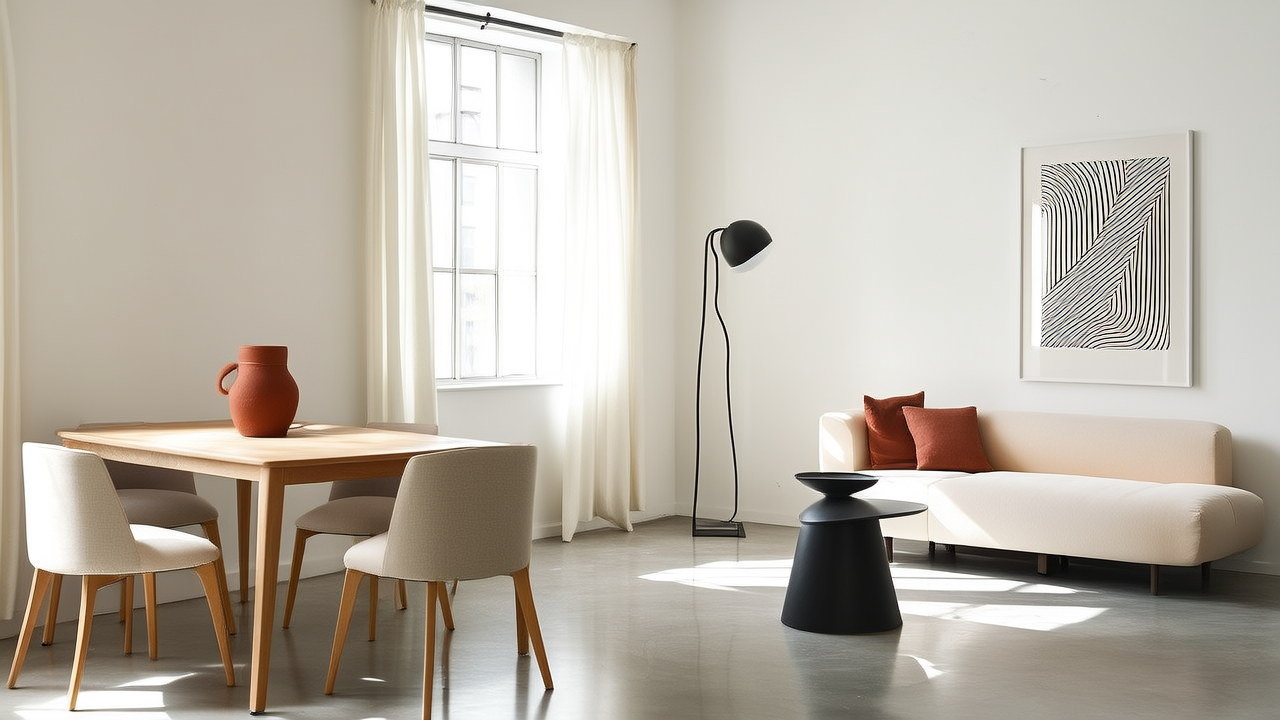
Sideboard vs Space: Balancing Storage and Style
A sideboard can transform a living room by adding storage, display, and visual weight, but it can also make a small room feel crowded. This article compares the benefits of a sideboard with the value of open space, using real measurements, brand examples, and layout rules. You will learn when a 60- to 72-inch sideboard works, when a 36-inch console is better, and how to keep circulation paths clear. The right answer depends on room size, storage need, seating layout, and how much negative space you want to preserve in daily use with style, safety, and ease.
Why the sideboard-vs-space question matters
Most living room frustration starts with a piece that looks right in a showroom but overwhelms the actual room. A sideboard placed against a wall can hold linens, games, remote controls, and serving pieces, yet the same piece can block a sofa walkway if the wall is short. Space is not just empty floor. It is breathing room, sightlines, traffic flow, and the visual quiet that lets furniture read as intentional. The designer question is not whether sideboards are good, but whether the room has enough room for one without reducing comfort.
What a sideboard brings to a living room
A sideboard is usually a long, low storage piece with drawers, doors, or open shelves. In many living rooms it works as a media alternative, a display surface, a linen station, or a casual serving counter. Popular examples include West Elm Mid-Century Sideboard, Crate and Barrel sideboards, Article Vantage, Pottery Barn storage sideboards, and IKEA BESTA units configured as long low storage. Compared with a bookcase, a sideboard keeps the wall line lower, which can preserve sightlines. Compared with a coffee table, it frees the center of the room and moves storage to the perimeter.
Storage depth and daily function
Typical sideboard dimensions range from 60 to 72 inches wide, 18 to 20 inches deep, and 30 to 36 inches high. A 72-inch sideboard from West Elm or Crate and Barrel can hide more than a 48-inch console, but it also claims more wall length. Depth matters as much as width. An 18-inch deep sideboard is often enough for board games, folded blankets, and media accessories. A 22-inch deep unit can feel bulkier in a narrow room and may block a walkway behind a sofa.
Drawer layout changes function. Three shallow drawers plus two cabinet doors is common for mixed storage. If you need file storage, look for pieces with at least one 12-inch deep drawer. If you need serving storage, measure your largest tray. Many standard serving trays are 12 by 16 inches, and a cabinet shelf should have at least 15 inches of width and 12 inches of height to stack neatly. Brands such as Jonathan Y, CB2, and Wayfair publish interior shelf dimensions, which are useful for buyers who want to avoid a pretty piece that cannot hold real objects.
Visual anchoring and negative space
A sideboard can anchor a living room by giving a long wall a base. Without it, a wall with artwork may feel floating, especially if the seating group is pushed away from it. But anchoring should not mean filling. If the sideboard is wider than 70 percent of the wall, the room can feel packed. A 10-foot wall with a 72-inch sideboard leaves 24 inches of total negative space if centered, or 30 inches on one side if offset. That offset can be useful, but only if the remaining floor area still allows movement.
Negative space also affects lighting and scale. A dark walnut sideboard from Pottery Barn or Crate and Barrel visually absorbs more room than a pale oak or white piece from IKEA or Article. If the sideboard sits under a window, its top height should stay below the sill line when possible, usually under 34 inches, so light can travel across the room. A piece that blocks daylight can make a good storage solution feel like a space thief.
What open space does for living room comfort
Open space creates the conditions that make a living room feel usable. It allows people to pass without turning sideways, lets seating groups breathe, and gives the eye a place to rest. In small rooms, even 12 inches of extra clearance can change how a sofa arrangement feels. Designers often use a 30 to 36 inch circulation path for primary walkways, and a 18 to 24 inch gap between the back of a sofa and a wall for a secondary path. A sideboard that reduces either measurement below those targets may look tidy but live poorly.
Space also supports flexibility. A living room that can change for a movie night, a game, a conversation, or a temporary desk is more comfortable than a room locked into one arrangement. If a sideboard fills a wall and forces a sectional into a fixed position, you have traded storage for adaptability. In many homes, the better move is to choose a smaller piece, a wall-mounted storage solution, or a sideboard with a lighter visual footprint.
- Keep at least 36 inches between the front edge of a sideboard and the front edge of a sofa when people must walk past it.
- Leave 24 inches beside a sofa arm for a side table and legroom when the room is 10 feet wide or less.
- Preserve a clear 42-inch path in open-plan living rooms because traffic patterns are less predictable than in a closed room.
- Do not let a sideboard cover more than 70 percent of a single wall unless the room is large enough to absorb the visual weight.
These targets are not decorative suggestions. They are practical thresholds based on common body clearance and furniture movement. A 30-inch passage may work for a person walking alone, but it becomes annoying when carrying a tray, moving a vacuum, or guiding a child through the room. If a sideboard makes those actions awkward, open space is doing more work than storage.
Measure first: when a sideboard fits and when space wins
Start with three measurements: wall length, wall height, and floor clearance from the proposed sideboard to the nearest seating edge. Then test the room with painter tape or cardboard. Mark a 60-inch by 18-inch footprint on the wall and floor. Stand where people normally walk. If you have to step around the tape or look down to avoid the edge, the piece is too large. If the tape reads as a calm line and the walkway remains comfortable, the sideboard is likely a good use of space.
| Living room situation | Best move | Clearance target | Why it works |
|---|---|---|---|
| Wall under 7 feet | Choose a 36 to 48 inch console or omit the sideboard | Leave 18 to 24 inches beside seating | Keeps the back wall open and avoids a crowded sofa line |
| Living room 12 by 16 feet | Use a 60 to 66 inch sideboard with tapered legs | Keep 30 to 36 inches in front | Adds storage while maintaining a light base and clear circulation |
| Open-plan great room | Place a 72 inch sideboard on the dining side, not the sofa wall | Allow 42 inches for traffic | Stores serving items near dining without shrinking the lounge |
| Room with built-in windows | Select a sideboard no taller than 32 inches | Leave sill height unblocked | Preserves daylight and prevents a heavy horizontal mass |
| Small apartment with no closet | Choose a deep 20 to 22 inch sideboard but shorten width | Use 48 to 60 inches only if wall allows | Maximizes storage volume without dominating every sightline |
The table assumes standard living room traffic, but real life can change the answer. If the sideboard will be behind a sofa, its top should stay below the sofa back or just above it. A 34-inch sideboard with a 36-inch sofa back can create a hard visual seam, while a 30-inch piece from IKEA or Article may read as a built-in ledge. If the sideboard faces the sofa, its height should be low enough to keep the room feeling horizontal and calm, typically under 34 inches.
Layout scenarios that decide the tradeoff
Small living room under 12 feet wide
In a small living room, sideboard width should be conservative. A 60-inch piece can overwhelm a 9-foot wall, especially if the sofa is 84 to 92 inches long. A 48-inch sideboard from West Elm or Crate and Barrel, or a 36-inch console from Pottery Barn, can provide closed storage without turning the room into a tunnel. Look for pieces with slender legs and a floating base. A 12-inch leg height can make an 18-inch deep cabinet feel lighter than a full plinth base.
Also consider color and finish. A white oak or chalk finish from IKEA, CB2, or Article tends to recede against a light wall. A dark walnut or black metal piece becomes a focal object and can make the wall feel closer. If the room has dark walls, use a pale sideboard or a glass-topped console to keep the wall plane from feeling heavy. In a small room, storage can still be present if the piece looks like it occupies less visual volume than its actual dimensions.
Open-plan living and dining
Open-plan rooms are where sideboards often shine because they can serve a purpose beyond decoration. A 72-inch sideboard placed on the dining side of the room can hold placemats, wine glasses, napkins, and serving trays. In an open plan from Pottery Barn, Crate and Barrel, or Jonathan Y, the sideboard can act as a soft room divider. It should not become a wall. Keep it low, usually 30 to 36 inches high, and leave the top open enough to show art, plants, or a lamp.
When the sideboard sits behind a sofa in an open plan, use a narrow depth, 12 to 15 inches, if possible. A console from Wayfair or CB2 can hold remote boxes, magazines, and a charging station without pushing the sofa away from the wall. If the sofa is floating in the room, a 15-inch console can be a better space decision than a 20-inch sideboard because it preserves the walkway behind the sofa. The tradeoff is less storage, but the room remains easier to move through.
Narrow hallway or entry-to-living room
If the living room opens from a hallway, a sideboard can become a choke point. Measure the hallway width first. A 36-inch hallway with a 20-inch sideboard protruding from the wall leaves 16 inches of passage, which is too tight for comfortable daily use. In that case, choose a 12-inch deep console or a wall-mounted cabinet. A 12-inch deep piece from Article or IKEA can hold mail, keys, and small items while keeping the floor line clear.
Entry sideboards also need visual calm because they are seen from multiple rooms. Avoid stacking tall objects on a narrow piece. A table lamp under 18 inches, a small tray, and one sculptural object are usually enough. If the piece must hold coats, baskets, and shoes, the living room may be better served by leaving the wall open and placing storage inside a closet or on a bench. The sideboard wins only when it does not make the threshold feel crowded.
Sideboard alternatives that preserve space
When a full sideboard steals too much floor or visual space, alternatives can solve the same problem with a smaller footprint. These pieces work well in rentals, small living rooms, and rooms where the wall must stay clear for traffic or artwork.
- Console table: 36 to 48 inches wide, 10 to 15 inches deep, 30 to 34 inches high; good for lamps, baskets, and charging stations.
- Wall-mounted cabinet: 40 to 60 inches wide, 10 to 12 inches deep; keeps floor open and works under windows.
- Floating shelves: 12 to 16 inches deep; useful for books and displays but not hidden storage.
- Media credenza with open base: 60 inches wide and 18 inches deep; can look lighter if legs or open shelf space are visible.
- IKEA BESTA or Kallax configuration: modular storage can be scaled down to 30 to 60 inches wide depending on room size.
- Upholstered bench with hidden storage: 40 to 60 inches wide, 18 inches deep, 18 inches high; adds seating and storage without a long cabinet.
A console table from CB2 or West Elm can replace a sideboard when the goal is display rather than deep storage. A wall cabinet from IKEA or Pottery Barn can replace a sideboard when the goal is closed storage near the floor line. Floating shelves from Wayfair or Article are good for visual interest, but they can feel busy if overfilled. The right alternative depends on whether the problem is physical space, visual space, or the type of items you need to store.
How to style a sideboard without stealing space
Styling can make a sideboard feel larger or smaller. The goal is to create a composition that reads as curated, not crowded. A sideboard top should usually have negative space, a mix of heights, and a few items with personal meaning. If the room is small, use fewer objects and keep the arrangement off-center. If the sideboard is long, use a symmetrical anchor, such as a lamp on each end, and place a tray of smaller items in the middle.
- Keep 30 to 40 percent of the top surface empty so the piece does not look like a storage bin.
- Use one lamp under 18 inches tall to add vertical interest without blocking sightlines.
- Stack two or three books horizontally, then place one small object on top for a layered but tidy look.
- Hide cords with a 24-inch cord channel or a cable box from West Elm or Pottery Barn if charging devices sit on the piece.
- Add a tray for remotes, coasters, or keys so loose items do not create visual noise.
- Keep art above the sideboard at eye level, with the bottom of the frame 6 to 10 inches above the tabletop.
- Use baskets with flat lids only if the basket height stays under 10 inches so the sideboard remains low.
Lighting also changes the perception of space. A sideboard with a table lamp can create a warm corner that makes the room feel larger than it is. A dark cabinet with no light can feel like a wall. If the room is narrow, place a lamp on the shorter end of the sideboard to draw the eye along the wall rather than blocking it. If the room has a tall ceiling, a larger vase or a pair of objects can help balance the wall, but only if the floor clearance remains comfortable.
Buyer checklist: sideboard vs space-saving pieces
Before buying, use a checklist that compares storage need with room reality. This prevents the common mistake of choosing a piece because it is beautiful, then discovering it makes the living room harder to use. Write down the items that must be stored: blankets, board games, wine, files, electronics, kids supplies, or serving pieces. Then decide whether those items need a sideboard or can live in another part of the home.
The checklist should include hard measurements. Confirm wall length, sideboard depth, door swing clearance, and the distance from the sideboard edge to the sofa, coffee table, and main walkway. Check product dimensions on brand pages for West Elm, Crate and Barrel, Article, Pottery Barn, CB2, IKEA, Jonathan Y, and Wayfair. Many listings show overall dimensions but not interior drawer depth. If a drawer is only 6 inches deep, it cannot store much beyond magazines and remote controls, even if the exterior looks large.
Also check the room after the sideboard is placed. Sit on the sofa and look toward the sideboard. Does it block the window, the TV, or the artwork? Stand at the room entrance and walk toward the seating area. Does the piece force a detour? If the answer is yes, choose a smaller piece or preserve the space. A living room should feel inviting at first glance, not like a showroom puzzle where every movement requires planning.
The best result is a sideboard that earns its footprint. If it stores the objects you use daily, supports the seating layout, and still leaves clear paths, it is a strong addition. If it merely fills a wall and makes the room feel tighter, open space is the better design choice. In most living rooms, the sideboard should serve the space, not compete with it.