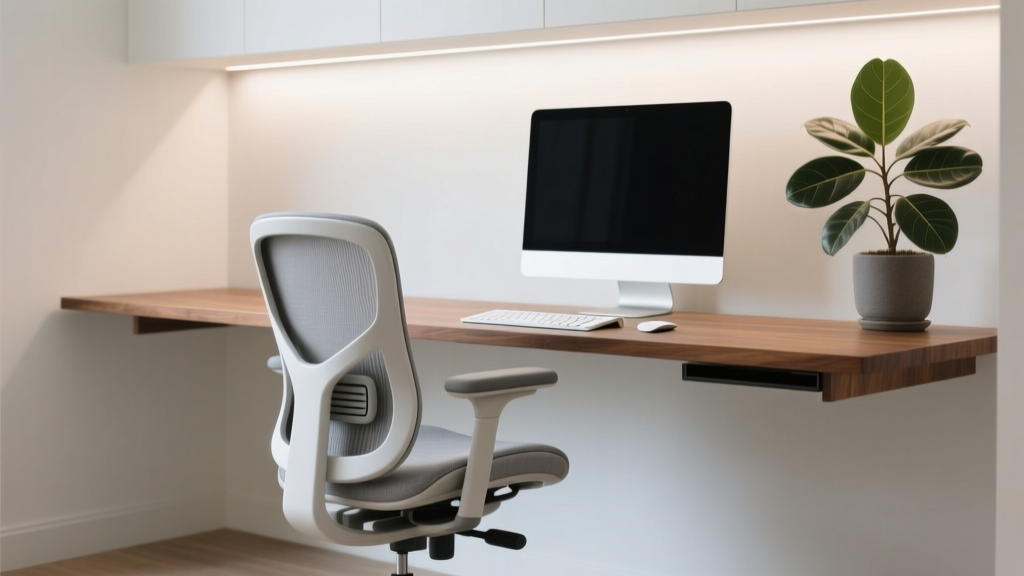
Most office chairs are designed for the statistical average — a person between 5 foot 6 and 6 foot tall. If you are under 5 foot 4, standard chairs often leave your feet dangling, the lumbar support hitting the wrong spot, and the armrests too high for comfortable typing. The good news is that several manufacturers now make task chairs specifically scaled for shorter users.
Why Standard Chairs Fail Petite Users
Ergonomic guidelines state that your feet should rest flat on the floor with knees at 90 degrees. For someone who is 5 foot 2, this requires a seat height of about 15 to 16 inches. Most standard chairs start at 17 inches and go up from there. That 1 to 2 inch difference forces petite users to either perch on the edge of the seat or use a footrest — both compromises that create new problems.
Seat depth is another common issue. A 20-inch deep seat pushes against the back of a shorter user's knees, cutting off circulation. The ideal seat depth for someone under 5 foot 4 is 15 to 17 inches, allowing 2 to 3 inches of clearance between the seat edge and the back of the knee.
Key Adjustments to Look For
Seat height range: Look for chairs that go as low as 14 to 15 inches. Some models offer a low-seat cylinder option that drops the range by 2 to 3 inches.
Seat depth adjustment: A sliding seat pan lets you shorten the effective depth. This is the single most important adjustment for petite users and is often missing from budget chairs.
Armrest height: Armrests should allow your elbows to rest at desk height without shrugging your shoulders. For petite users, this means armrests that adjust down to 5 to 6 inches above the seat surface.
Lumbar position: The lumbar support needs to sit at the small of your back, which is higher relative to the seat for shorter torsos. Adjustable lumbar height is essential.
Frame and Proportion Considerations
Beyond adjustments, the physical proportions of the chair matter. A backrest that is too tall will push your head forward. Look for backrest heights of 20 to 23 inches rather than the standard 25 to 28 inches. The overall chair width should also be proportionate — a 22-inch wide seat can feel like sitting in a bucket if you are 5 foot tall.
Price Ranges
Budget options (200 to 400 dollars) with petite-friendly adjustments are available from brands like Hbada and SIDIZ. Mid-range chairs (400 to 800 dollars) from Steelcase and Herman Miller offer more precise adjustability. Premium ergonomic chairs (800 to 1,500 dollars) like the Herman Miller Aeron Size A or Steelcase Leap provide the most comprehensive petite-friendly features with longer warranties.
Common Mistakes to Avoid
- Using a footrest as a permanent fix: A footrest addresses seat height but does nothing for seat depth, armrest height, or lumbar position.
- Assuming all "small" chairs work: Some chairs labeled as petite are simply smaller versions without proportionate adjustments. Test or check specifications carefully.
- Ignoring desk height: Even the perfect chair will not help if your desk is too high. Standard desk height (29 to 30 inches) is often too tall for users under 5 foot 4. Consider a height-adjustable desk or keyboard tray.
- Skipping the trial period: Comfort is subjective. Buy from retailers that offer 30-day return policies so you can test the chair in your actual workspace.
Making the Final Decision
Measure your ideal seat height (from floor to the back of your knee minus 1 inch) and seat depth (from the back of your hip to the back of your knee minus 2 inches). Use these numbers as your filter when comparing chairs. Any chair that cannot adjust to match both measurements is not right for you, regardless of reviews or brand reputation.