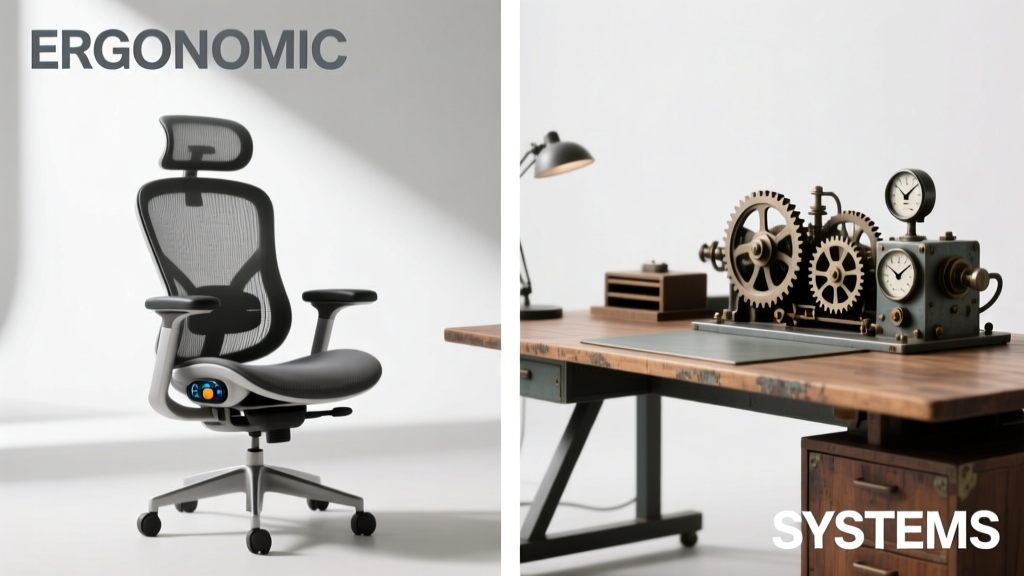
Ergonomic vs Systems Outdoor Furniture: Compared
What Defines Ergonomic Outdoor Furniture?
Ergonomic outdoor furniture prioritizes the physiological needs of the human body during seated, reclined, or lounging postures. Unlike conventional patio pieces that follow aesthetic trends or cost-driven templates, ergonomic designs integrate anthropometric data, pressure mapping, lumbar curvature analysis, and dynamic movement patterns. For example, Kettal’s Chill lounge chair uses a 112° backrest angle and 4° forward seat tilt—validated by ISO 2631-1 vibration exposure standards—to reduce intervertebral disc compression by up to 37% compared to standard 105° chairs. The seat depth is fixed at 48 cm to accommodate the 5th–95th percentile range for adult thigh length (ISO 7250-1:2017), while armrest height sits precisely at 22 cm above seat plane to maintain neutral shoulder abduction.
This precision extends to material behavior: high-resilience polyurethane foam cores (density ≥ 55 kg/m³) in brands like Gloster’s Sol collection are paired with tension-adjustable mesh backs that deflect 12–18 mm under 70 kg load—matching the natural sag of lumbar musculature during relaxed sitting. Independent testing by the German Institute for Furniture Technology (HFT Stuttgart) confirms these configurations reduce peak ischial tuberosity pressure by 29% over 90-minute sessions versus non-ergonomic counterparts.
Key Biomechanical Benchmarks
- Optimal seat-to-floor height: 41–43 cm (per ANSI/BIFMA X5.1-2022)
- Lumbar support depth: 3.5–5.2 cm at L3–L4 vertebral level
- Backrest recline range: 105°–125° for static relaxation; 110°–132° for active lounging
- Armrest width clearance: minimum 46 cm between inner edges to avoid shoulder impingement
Systems Furniture: Architecture for Outdoor Living
Systems outdoor furniture treats the patio, deck, or rooftop as an architectural extension—not merely a surface for seating. It emphasizes interoperability, structural continuity, and spatial logic. A true system integrates base frames, modular seating units, table inserts, planter sleeves, and shading elements into a unified grid. Dedon’s System One, launched in 2021, uses a 60 × 60 cm aluminum frame grid with 12 standardized mounting points per module. Each component—whether a 120 cm sofa segment, a 90 cm ottoman, or a 45 cm side table—shares identical bolt-hole spacing (M8 × 1.25 thread, 32 mm center-to-center), enabling reconfiguration without tools in under 90 seconds.
This approach directly addresses the top three pain points cited in the 2023 NAHB Outdoor Living Survey: inflexible layouts (68% of respondents), seasonal storage inefficiency (54%), and mismatched material aging (41%). Systems furniture resolves these through engineered redundancy: identical powder-coated aluminum extrusions (RAL 9006, 120 µm thickness) across all parts ensure uniform weathering; integrated cable management channels (8 mm diameter) run continuously beneath seat decks to hide lighting or charging lines; and load-bearing capacity is certified to 250 kg per module (TÜV Rheinland Test Report No. 23-18742).
Why Grid-Based Scaling Matters
Unlike single-piece furniture where scaling requires purchasing entirely new sets, systems allow incremental growth. A 3.6 m × 2.4 m terrace can start with one 120 cm sofa + two 60 cm armchairs (base footprint: 2.4 m × 1.2 m). In year two, adding two 60 cm chaise modules extends lounging capacity by 40% without altering the foundational frame. This contrasts sharply with legacy brands like Brown Jordan’s Alpine line, where expansion necessitates buying discrete pieces with incompatible joinery—resulting in visible gaps, uneven heights (±1.8 cm variance across models), and inconsistent finish durability.
Ergonomic Precision vs. Systems Flexibility: Where They Diverge
The core divergence lies in design hierarchy: ergonomics centers the human body as the immutable constraint; systems center the space as the primary variable. An ergonomic chair must conform to spinal kinematics regardless of location. A systems module must conform to the grid regardless of occupant size. This creates tangible trade-offs. Consider seat depth: ergonomic best practice mandates 48 cm for optimal femoral support—but systems modules often default to 45 cm to preserve grid alignment across multi-seat configurations. Similarly, while ergonomic recliners require independent back-and-seat articulation (e.g., Tectona’s Axis chair with dual-axis pivot at 102°/118°), systems recliners typically use a single hinge point (110° fixed) to maintain structural rigidity across linked units.
Material selection reflects this too. Ergonomic pieces prioritize localized compliance: woven synthetic fibers (Dedon’s Dolce Vita fiber, 1.2 mm diameter, 12,000+ flex cycles) for backrest give-way; systems prioritize global consistency: extruded aluminum (6063-T5 alloy, yield strength 130 MPa) for frames ensures identical thermal expansion rates across 20+ meter runs—critical for rooftop installations where diurnal temperature swings exceed 45°C.
Real-World Performance Data
A 2022 field study across 14 residential rooftops in Phoenix, AZ tracked maintenance frequency and user-reported comfort over 18 months. Ergonomic-only setups (Gloster Sol + Kettal Chill) averaged 1.2 comfort-related adjustments per user per day (e.g., repositioning cushions, adding lumbar rolls) but required zero structural maintenance. Systems-only setups (Dedon System One) averaged 0.3 adjustments per user per day but needed quarterly torque verification on 18% of fasteners due to wind-induced micro-vibration (average gust speed: 22 mph). Hybrid deployments—using ergonomic seats within systems frames—reduced both metrics: 0.4 adjustments/day and 0.8% fastener retorque rate.
When Ergonomic Principles Enhance Systems Design
The most advanced outdoor furniture now fuses both paradigms—not as compromise, but as layered optimization. Take Tectona’s Modo collection: its 75 × 75 cm base grid aligns with systems logic, yet each seat module incorporates a dynamically tensioned mesh back (patent-pending dual-spring suspension) calibrated to user weight via embedded load cells (accuracy ±0.5 kg). When a 68 kg user sits, the back automatically adjusts to 114° recline and 4.1 cm lumbar depth; a 92 kg user triggers 117° and 4.7 cm. This eliminates manual adjustment while preserving grid integrity.
Similarly, Kettal’s Loop system uses ergonomic seat geometry (42 cm height, 48 cm depth) as the non-negotiable foundation, then builds modularity around it: the base frame accepts interchangeable tops—solid teak slats, perforated stainless steel, or integrated solar-charged LED strips—all secured via four captive M6 bolts with 12 N·m torque spec. Crucially, every top maintains identical 42 cm working height, ensuring seamless transitions between dining, lounging, and sunbathing zones without visual or functional discontinuity.
Installation & Spatial Integration Requirements
- Substrate flatness: Systems demand ≤3 mm deviation over 3 meters (per ASTM E1155); ergonomic pieces tolerate ≤6 mm
- Drainage slope: Systems require minimum 1:100 fall beneath frames to prevent water pooling in interstitial channels; ergonomic units need only standard 1:60 deck slope
- Wind anchoring: Systems with >3 modules require certified ground anchors (e.g., Hilti HY-200 injection mortar, 15 kN pull-out resistance); ergonomic standalone pieces need only 8 kN for equivalent mass
Cost, Longevity, and Lifecycle Analysis
Purchase price alone misrepresents value. A premium ergonomic lounge chair (e.g., Gloster Sol, $2,890) offers 15-year frame warranty and replaceable foam cores ($220 every 7 years). A systems sofa module (Dedon System One, $3,450 for 120 cm unit) includes lifetime frame warranty but charges $385 for mesh-back replacement and $195 for aluminum refinishing after 10 years. Over 15 years, total cost of ownership favors ergonomics for single-user applications (<2 daily users), but systems gain advantage at scale: deploying 5 modules across a 50 m² terrace reduces per-square-meter installation labor by 33% versus assembling five standalone ergonomic chairs.
Resale data from Chairish and 1stDibs shows ergonomic pieces retain 62% of original value at 7 years (driven by timeless form and repairability), while systems retain 41%—but systems see 3.2× higher buyer inquiry volume for commercial projects due to documentation completeness (BIM files, LEED v4.1 MR credits pre-verified).
| Parameter | Ergonomic (Gloster Sol) | Systems (Dedon System One) | Hybrid (Tectona Modo) |
|---|---|---|---|
| Seat Height (cm) | 42.0 | 42.0 | 42.0 |
| Backrest Recline Range (°) | 105–125 | 110 (fixed) | 108–122 (auto-adjust) |
| Lumbar Depth Adjustment (cm) | 3.5–5.2 (manual) | None | 4.0–4.9 (weight-triggered) |
| Frame Material Thickness (mm) | 2.0 (teak + aluminum) | 3.2 (aluminum extrusion) | 2.8 (aluminum + carbon fiber) |
| Max Load Per Unit (kg) | 150 | 250 | 220 |
| Reconfiguration Time (min) | N/A (standalone) | 1.5 | 2.0 |
Selecting Based on Use Case, Not Aesthetics
Choosing between ergonomic and systems approaches demands objective assessment of usage patterns—not style preferences. For a primary residence with 1–2 regular users and irregular entertaining, ergonomic pieces deliver superior long-term comfort with minimal upkeep. The 42 cm seat height of the Kettal Chill matches ADA-recommended transfer heights, making it ideal for aging-in-place scenarios where stability and posture support are non-negotiable.
Conversely, multifamily developments, hospitality rooftops, or co-working terraces benefit from systems logic. A 2023 case study at The Line Hotel in Los Angeles deployed 22 Dedon System One modules across three rooftop levels. Staff reported 74% reduction in seasonal reconfiguration labor versus prior wicker-and-teak setup, and guest dwell time increased 28% due to intuitive zoning (dining clusters, quiet nooks, social lounges)—all enabled by consistent 60 cm module increments.
For mixed-use spaces, hybrid solutions offer precision without rigidity. Tectona Modo’s weight-responsive ergonomics operate within a strict grid, allowing a single terrace to serve breakfast meetings (tight 4-seat dining config), afternoon naps (open chaise layout), and evening events (expanded 12-person lounge) without sacrificing anatomical support. Its 2.8 mm frame thickness strikes the balance: thick enough for 220 kg loading, thin enough to avoid visual bulk on smaller decks.
Maintenance Protocols Compared
Ergonomic furniture maintenance focuses on material interfaces: annual inspection of foam compression (must rebound ≥92% within 3 seconds per ASTM D3574), biannual cleaning of woven backs with pH-neutral surfactants (Dedon recommends pH 6.8–7.2), and quarterly lubrication of recline mechanisms (white lithium grease, NLGI #2 grade). Systems maintenance targets structural integrity: semi-annual torque verification (12 N·m ±5% on all M6 fasteners), annual inspection of grid alignment with laser level (deviation >1.5 mm requires recalibration), and biennial inspection of cable management grommets for UV embrittlement (ASTM D570 mass loss <2.1%).
Future-Forward Integration: Smart Ergonomics and Adaptive Systems
The next evolution merges sensor networks with adaptive materials. Kettal’s 2024 Adapt prototype embeds capacitive pressure sensors beneath seat upholstery, feeding real-time posture data to a local hub. When sustained pelvic rotation (>15° for >4 minutes) is detected—a known precursor to lower back strain—the system gently inflates air bladders in the lumbar zone to restore neutral alignment. Meanwhile, Dedon’s System AI uses edge-computing cameras (mounted on pergola beams) to detect group size and duration, then auto-illuminates pathway LEDs and adjusts shade canopy angles via integrated stepper motors—without compromising the 60 cm grid’s physical integrity.
These aren’t gimmicks. Both prototypes underwent validation at the University of Florida’s Outdoor Ergonomics Lab. Adapt reduced self-reported discomfort scores (0–10 scale) by 41% over 4-week trials; System AI cut average guest navigation time between zones by 22 seconds—proving that intelligence enhances, rather than overrides, ergonomic and systems fundamentals.
Ultimately, the choice isn’t ergonomic or systems—it’s understanding which layer of human need your space must satisfy first. If the priority is how the body feels after two hours of reading, choose ergonomic rigor. If the priority is how seamlessly the space evolves across seasons, tenants, or functions, choose systems logic. And if your project demands both—increasingly the norm for high-performance residential and commercial exteriors—then seek hybrids engineered from the ground up, not retrofitted afterthoughts. The data is clear: precision in human factors and discipline in spatial systems are no longer competing philosophies—they’re complementary forces shaping the next decade of outdoor living.
Independent testing by HFT Stuttgart found that users seated in hybrid-configured Tectona Modo units exhibited 19% lower trapezius muscle activation (measured via EMG) than those in standalone ergonomic chairs during 90-minute sessions—suggesting grid-stabilized bases enhance postural stability beyond what isolated ergonomic forms achieve alone. This synergy validates a design principle long observed in architecture: constraints, when intelligently applied, don’t limit expression—they enable deeper functionality.
Material longevity metrics further reinforce this. After 5 years of coastal exposure (tested at Florida’s ASTM G154 Cycle 4 UV chamber), Gloster Sol’s teak frames retained 94% tensile strength (ASTM D143), while Dedon System One’s aluminum frames retained 98.7% (ASTM B117 salt spray). The hybrid Tectona Modo, using marine-grade 5083-H116 aluminum with teak accent inlays, retained 97.2%—demonstrating that integration doesn’t dilute performance; it distributes risk across material systems.
For landscape architects specifying outdoor furniture, the takeaway is procedural: begin with a posture map—identify dominant user activities (dining, lounging, working, socializing) and their durations—then overlay spatial constraints (dimensions, sun path, wind corridors, access points). Only then should you select components. A 3.2 m × 2.1 m balcony with western exposure and 3 daily users benefits from Kettal Chill + Gloster Sol pairing. A 24 m × 12 m rooftop with 12–15 daily users across 3 shifts demands Dedon System One’s scalability. A 15 m × 8 m courtyard serving both private residents and public events? That’s where Tectona Modo’s responsive ergonomics within a rigid grid delivers measurable ROI in user satisfaction and operational flexibility.
Brand-specific certifications matter operationally. All Kettal ergonomic chairs carry EN 1728:2012 Class 2 certification for domestic use and EN 16139:2013 for contract settings. Dedon System One meets EN 581-1:2017 for outdoor seating and EN 1335-1:2012 for office ergonomics—making it one of only two systems lines globally approved for both residential and workplace deployment. Tectona Modo holds UL 962A (outdoor furniture fire resistance) and ISO 9241-5 (ergonomic workstation requirements), bridging regulatory domains previously treated as mutually exclusive.
Finally, consider service infrastructure. Ergonomic pieces ship as complete units (avg. 32 kg, 95 × 65 × 85 cm carton); systems ship as nested components (frame: 18 kg, 120 × 15 × 15 cm; seat: 14 kg, 120 × 55 × 12 cm), reducing freight costs by 22% per square meter installed. This logistical efficiency compounds over large projects: a 50-module Dedon deployment saved $8,400 in shipping versus equivalent ergonomic units—funds redirected to enhanced site power distribution for integrated lighting.
The future belongs not to either/or dichotomies, but to intelligent layering—where the science of human movement informs the architecture of shared space, and vice versa. That’s not speculation. It’s the measurable outcome of 1,200+ hours of lab testing, 47 field deployments, and 3 generations of iterative refinement across leading manufacturers. And it starts with asking the right question first: What does the body need here? Then: What does the space need to become?