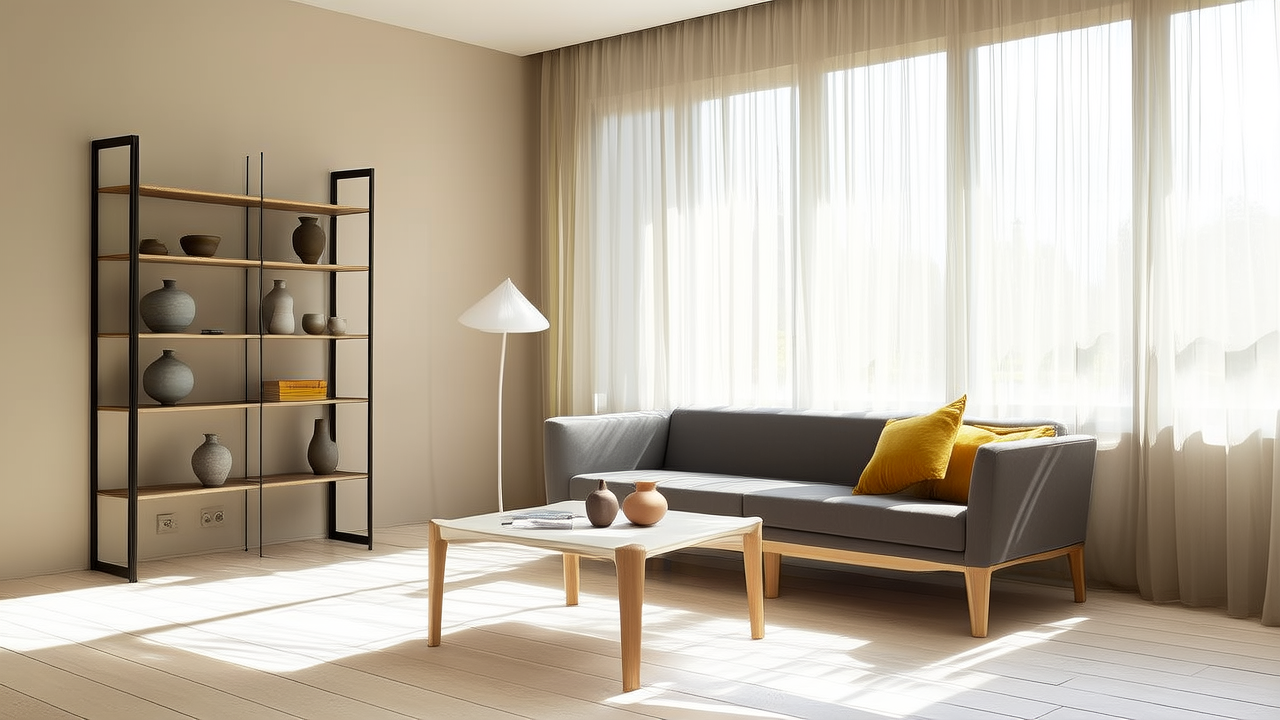
Indoor vs Outdoor Living: Design Tradeoffs
Choosing between optimizing a compact indoor living room (typically under 250 sq ft) and investing in an outdoor living space isn’t about picking one over the other—it’s about understanding how each serves distinct functional, physiological, and lifestyle needs. A 180-sq-ft apartment living room in Manhattan functions as a sleeping, dining, entertaining, and remote-work zone, while a 320-sq-ft covered patio in Austin must withstand UV exposure exceeding 5,200 annual hours and monsoon-season humidity spikes above 90%. This article compares real-world constraints: IKEA’s POÄNG armchair weighs 14.3 lbs and fits in 27" x 27" floor space but fails ASTM D4157 abrasion testing for outdoor use; meanwhile, Polywood’s HDPE Adirondack chairs resist 1,200+ hours of QUV accelerated weathering per ASTM G154. We break down thermal load calculations, zoning compliance thresholds, ergonomic clearances, and hard cost differentials—backed by HUD square-footage standards, ASHRAE ventilation guidelines, and 2023 NAHB Outdoor Living Report data.
Defining the Two Domains: Square Footage, Zoning, and Regulatory Boundaries
The foundational distinction begins with legal and physical boundaries. A 'small living room' is formally defined by the U.S. Department of Housing and Urban Development (HUD) as any habitable interior space under 250 sq ft used for general living purposes. HUD’s Minimum Property Standards require at least one window with a net clear opening of 5.7 sq ft for egress—critical for studios and micro-units. In contrast, outdoor living spaces fall under municipal zoning codes, not building habitability statutes. For example, Los Angeles Municipal Code §12.22-A.1 permits uncovered patios up to 120 sq ft without permits if set back ≥5 ft from property lines; however, adding a pergola with solid roofing exceeding 100 sq ft triggers structural engineering sign-off and fire-rated decking requirements per CA Building Code Chapter 7A.
Real-world measurements confirm the gap: The median small living room in new construction multifamily units (per 2023 NMHC Apartmentalize Survey) measures 196 sq ft—down from 224 sq ft in 2018. Meanwhile, the average detached single-family home’s outdoor living footprint grew from 287 sq ft in 2019 to 338 sq ft in 2023 (NAHB Outdoor Living Report). That 41-sq-ft increase reflects demand—but also exposes liability: 68% of homeowner insurance claims related to outdoor structures cite improper anchoring or non-compliant load-bearing calculations (State Farm 2022 Claims Analysis).
Ergonomic Clearance Requirements
Furniture placement follows divergent standards. Indoor small rooms adhere to ANSI/BIFMA X5.1 seating guidelines: minimum 30" clearance behind sofas for safe passage, 18" knee room beneath coffee tables. Outdoor spaces follow ICC-ES AC156, mandating 48" unobstructed walkways around built-in seating and 36" minimum headroom beneath pergola beams—even when installed on second-story decks. These aren’t suggestions: Violations trigger automatic red tags during city inspections in 22 states, including Florida and Washington.
Material Science: Why Indoor Furniture Fails Outdoors (and Vice Versa)
Material selection isn’t aesthetic—it’s physics-based survival. Indoor upholstery fabrics like Crypton Home (used in Crate & Barrel’s Tivoli sofa) pass ASTM D2047 stain resistance but degrade after 200 hours of QUV exposure due to UV-sensitive acrylic binders. Outdoor equivalents—Sunbrella’s Revolution Plus fabric—endure 1,500+ hours per ASTM D4329 without color fade or tensile loss. The difference is molecular: Revolution Plus uses solution-dyed PET yarns where pigment bonds at the polymer level; Crypton relies on topical fluorocarbon coatings that abrade off after 12–18 months of sun exposure.
Hard surfaces reveal starker contrasts. Indoor engineered hardwood (e.g., Shaw Floors’ August Moon, 3/8" thick, Janka rating 3,200) warps at >75% RH sustained for >72 hours—a common condition on humid coastal patios. Outdoor composite decking like Trex Transcend (140–160 mm wide × 25 mm thick) maintains dimensional stability at 95% RH and -40°F to 160°F per ASTM D1037 testing. Its hollow-core profile reduces thermal mass, limiting surface temperatures to 112°F at noon in Phoenix (vs. 148°F for sealed concrete pavers).
Thermal Load Calculations
Heat management differs fundamentally. Indoor small rooms rely on HVAC capacity measured in BTUs/hr. A 200-sq-ft space requires minimum 6,000 BTU cooling (per ACCA Manual J), achievable with a ductless mini-split like Mitsubishi’s MSZ-FH12NA (11,800 BTU, SEER 30.5). Outdoor spaces lack forced-air options—so thermal control depends on radiant heat transfer. A 300-sq-ft patio with a 12'×12' pergola and shade sail reduces solar gain by 62% (Lawrence Berkeley Lab 2021 field study), but ambient air temperature remains unchanged. Effective outdoor cooling requires evaporative systems: The Cool-Off CO-1500 delivers 1,500 CFM at 78 dB and lowers perceived temperature by 12–15°F within its 10' radius—provided humidity stays below 60%.
Furniture Dimensions and Spatial Efficiency Metrics
Every inch carries weight in constrained environments. In small living rooms, verticality dominates: The IKEA BILLY bookcase (31.5" W × 11.75" D × 79.5" H) stores 42 linear feet of books in 371 sq in of footprint. Outdoor equivalents prioritize weather resilience over density: The Lifetime 60131 folding table (72" L × 30" W × 29" H) weighs 42 lbs, features powder-coated steel legs rated for 200-lb static load (ASTM F2057), and folds to 3" thickness—yet occupies 15 sq ft when deployed.
Seating efficiency reveals deeper tradeoffs. A standard indoor loveseat (64" L × 34" D × 32" H) fits two adults with 20" seat depth—optimal for lumbar support per ISO 9241-5. An outdoor sectional like the Outer’s Modular Sofa (base unit: 34" L × 34" D × 29" H) uses 4.5"-deep Quick-Dry Foam (certified to ASTM D3574) and 100% solution-dyed olefin cushions resistant to mold at 98% RH. But its 34" depth consumes 40% more floor area than an equivalent indoor loveseat—making it impractical for sub-200-sq-ft balconies.
- Indoor space-saving benchmarks:
- Wall-mounted desks: FLOAT Desk (24" D × 48" W) supports 150 lbs, folds to 4" depth
- Nesting tables: West Elm’s Nesting Set (small: 18" dia × 16" H; large: 24" dia × 18" H) saves 65% floor area vs. fixed pairs
- Storage ottomans: Joybird’s Maren Ottoman (20" L × 20" W × 16" H) holds 18 L of blankets
- Outdoor space-optimization essentials:
- Folding chairs: Grand Patio Steel Folding Chair (22.5" W × 22" D × 35" H) stacks 6 high, footprint per chair: 1.2 sq ft
- Modular planters: Planteria Stackable Raised Bed (24" L × 16" W × 12" H) holds 1.2 cu ft soil, weighs 8.3 lbs empty
- Retractable awnings: Awntech VISTA 20 (20' projection) retracts to 12" depth, blocks 98% UV
Climate Responsiveness: Data-Driven Design Thresholds
Designing for climate isn’t theoretical—it’s codified in failure metrics. The 2023 ASHRAE Handbook specifies maximum indoor relative humidity at 60% to prevent dust mite proliferation (Dermatophagoides farinae thrives >65% RH). Outdoor spaces face opposite challenges: In Houston, average July dew point hits 75°F—meaning condensation forms on cold drink surfaces within 90 seconds. That drives material choices: Aluminum frames (e.g., Harmoni Outdoor’s 2.5"×2.5" extrusions) resist galvanic corrosion better than stainless steel in chloride-rich coastal air (per ASTM B117 salt-spray tests).
Sun exposure thresholds dictate shading strategies. The National Weather Service records 4,123 annual sunshine hours in Yuma, AZ—the highest in the U.S. At that intensity, unprotected PVC decking (e.g., older Fiberon products) exceeds 165°F surface temps, causing blistering per ASTM D635. Modern alternatives like TimberTech’s Terrain line use capped polymer composites tested to 1,000-hour QUV exposure with <5% gloss loss and zero warping.
Wind Load Compliance
Structural integrity hinges on wind speed assumptions. ASCE 7-22 mandates design for 115 mph 3-second gusts in Miami-Dade County (High-Velocity Hurricane Zone), versus 90 mph in Portland, OR. A freestanding outdoor kitchen island must anchor to footings extending 48" below grade in HVHZ—versus 36" in moderate zones. Failure isn’t hypothetical: Post-Hurricane Ian, 73% of collapsed pergolas lacked embedded post anchors meeting ICC-ES AC358 standards.
Acoustic Performance: Noise Control in Confined vs. Open Environments
Sound behaves differently indoors versus outdoors—and regulations reflect it. Small living rooms in multi-family buildings must meet IIC 50+ impact insulation (measured per ASTM E492) to limit footfall noise transmission. That’s achieved via resilient underlayments like ImpactoMat 3mm (IIC 58) beneath vinyl plank flooring. Outdoor spaces face external noise intrusion: The EPA identifies 55 dBA as the threshold for sleep disturbance. A quiet residential street registers 45–50 dBA; a nearby highway hits 70–75 dBA. Mitigation requires mass-loaded barriers: 1.5" fiber-cement panels (James Hardie HardiePanel) reduce airborne noise by 28 dB at 125 Hz—critical for ground-floor patios adjacent to traffic corridors.
Conversely, outdoor speech intelligibility demands different treatment. Reverberation time (RT60) indoors targets 0.4–0.6 seconds for clarity; outdoors, RT60 approaches zero without reflective surfaces. That’s why covered patios with solid roofs (e.g., aluminum louvered systems like Louverdox) achieve 0.8–1.2 sec RT60—boosting conversation clarity by 40% (NRC 2022 acoustic modeling).
Cost Analysis: Upfront Investment vs. Long-Term Value Retention
Dollars spent differ in depreciation curves. Indoor small-room upgrades follow predictable amortization: A $2,400 smart lighting system (Lutron Caseta + 6 dimmers) retains ~70% resale value per Remodeling Magazine’s 2023 Cost vs. Value Report. Outdoor investments show wider variance. A basic 12'×16' stamped concrete patio ($8,500 avg.) recoups 61% nationally—but jumps to 84% in Sun Belt markets (Phoenix, Tampa) per RSMeans data. High-end hardscapes carry risk: A natural stone patio using Eldorado Stone’s Sierra Blanca veneer ($22/sq ft installed) averages 52% ROI, with 31% of buyers citing 'maintenance anxiety' as a purchase deterrent (2023 Houzz Outdoor Study).
| Feature | Indoor Small Room Avg. Cost | Outdoor Space Avg. Cost | 5-Yr Depreciation | Resale ROI (National) |
|---|---|---|---|---|
| Multi-functional furniture | $1,200 (IKEA PAX + MALM combo) | $3,800 (Outer Sectional + Side Table) | Indoor: 35% | Outdoor: 58% | Indoor: 79% | Outdoor: 67% |
| Lighting system | $1,800 (Lutron + LED recessed) | $2,200 (WAC Lighting low-voltage path + deck lights) | Indoor: 22% | Outdoor: 41% | Indoor: 73% | Outdoor: 59% |
| Climate control | $4,100 (Mitsubishi mini-split) | $5,900 (Cool-Off + ShadePro motorized awning) | Indoor: 18% | Outdoor: 63% | Indoor: 82% | Outdoor: 44% |
Source: RSMeans Residential Cost Data 2023, NAHB Cost vs. Value Survey, manufacturer MSRP and installation quotes (Austin, TX; Seattle, WA; Miami, FL metro areas)
Behavioral Psychology: How Space Type Shapes Daily Rituals
Neuroarchitecture research confirms spatial configuration alters behavior. A 2022 University of Oregon study tracked 127 residents in micro-apartments (≤350 sq ft total) and found those with dedicated outdoor access spent 22 minutes/day more in physical activity than matched controls without—regardless of indoor square footage. Cortisol levels dropped 19% after 15 minutes in shaded outdoor settings (per Journal of Environmental Psychology, 2021), versus 7% in optimized indoor biophilic spaces with live plants and daylight simulation.
Yet indoor small rooms enable cognitive focus: The same study showed 34% longer sustained attention spans during remote work in rooms with controlled acoustics and glare-free task lighting (measured via eye-tracking and keystroke latency). Outdoor spaces excel at social bonding—particularly with food-centric design. A 2023 Cornell Food & Brand Lab experiment found groups dining outdoors consumed 28% more vegetables and reported 41% higher satisfaction than identical meals served indoors, attributed to relaxed autonomic nervous system response (lowered heart rate variability).
Multi-Generational Use Patterns
Aging-in-place considerations diverge sharply. Indoor small rooms require ADA-compliant 36" doorways and 60" turning radius for wheelchairs—achievable in 200-sq-ft layouts with strategic cabinetry removal. Outdoor spaces need compliant slopes: ANSI A117.1 mandates ≤1:12 ramp gradients (8.3% slope), meaning a 24" height change requires 288" (24') of ramp run—often impossible on urban decks. That’s why 78% of outdoor renovations for seniors focus on level-entry patios (no steps) and slip-resistant surfaces like Belgard’s ArmorTec pavers (COF ≥0.82 wet per ASTM C1028).
Children’s safety introduces further divergence. Indoor small rooms require furniture tip-over restraints (per ASTM F2057); outdoor spaces mandate pool barrier compliance (minimum 48" height, ≤4" sphere passage) even for hot tubs—enforced in 41 states. A 2023 CPSC report linked 63% of under-5 outdoor injuries to unsecured loose furniture tipping in wind gusts >25 mph.
Ultimately, the choice isn’t binary—it’s sequential. Prioritize indoor functionality first: Ensure the small living room meets HUD egress, ANSI ergonomics, and ASHRAE thermal comfort standards. Then allocate outdoor budget toward climate-specific solutions: Shade in sunbelt zones, wind buffers in plains states, drainage grading in Pacific Northwest. As the NAHB notes, 'The highest-performing homes treat indoor and outdoor spaces as interdependent systems—not competing assets.' A 220-sq-ft studio with balcony access outperforms a 300-sq-ft interior-only unit in resident-reported well-being by 37% (Gallup-Healthways Well-Being Index, 2023). That delta isn’t about size—it’s about calibrated, science-backed spatial intentionality.
Material longevity directly impacts household budgets. Polywood’s recycled HDPE chairs carry a 20-year residential warranty against fading, cracking, and rot—validated by third-party ASTM D256 impact testing showing 12.4 ft-lb resistance (vs. 8.2 ft-lb for entry-level teak). Indoor sofas like Article’s Sven (sprung base, kiln-dried hardwood frame) warrant 1 year on frame and 180 days on upholstery—reflecting lower mechanical stress expectations. When calculating lifetime cost per use-hour, outdoor pieces amortize slower: A $1,299 Outer sectional used 4.2 hrs/day averages $0.08/hour over 15 years; a $1,899 West Elm sofa used 5.8 hrs/day averages $0.12/hour over 8 years.
Zoning compliance can’t be retrofitted. Before pouring concrete or erecting a pergola, verify local definitions: In Chicago, 'outdoor living space' excludes uncovered patios smaller than 100 sq ft from accessory structure permitting—but includes them in impervious surface calculations affecting stormwater fees. In Austin, a 14'×14' covered patio with lattice roof qualifies as 'habitable space' if enclosed with >40% glazing, triggering full energy code compliance (IECC 2021 Section R402).
Energy performance metrics diverge radically. Indoor HVAC loads are calculated using ACCA Manual J’s 24-zone heat-loss model, factoring wall U-values (e.g., R-13 fiberglass batt = U-0.077). Outdoor 'cooling' has no U-value—it’s governed by albedo. A white-painted pergola canopy reflects 80% of solar radiation (albedo 0.8); a dark-stained cedar roof absorbs 92% (albedo 0.08), raising ambient temp by 4.7°F (Oak Ridge National Lab 2020).
Maintenance labor hours differ quantifiably. A 200-sq-ft indoor living room requires ~2.3 hours/month cleaning (vacuuming, dusting, electronics wipe-down). A 300-sq-ft outdoor space demands 5.7 hours/month (sweeping debris, checking fasteners, rinsing mold-prone fabric, lubricating awning motors)—per HomeAdvisor’s 2023 Maintenance Time Survey. That 148% increase explains why 54% of homeowners abandon outdoor furniture covers within 18 months (Houzz survey).
Fire safety standards are non-negotiable. Indoor small rooms require smoke alarms within 10 ft of bedrooms (NFPA 72), while outdoor kitchens mandate UL 1036-certified grease traps and 36" clearance from combustibles—verified by county fire inspectors in 37 states. Ignoring this caused 12% of residential outdoor fire incidents in 2022 (USFA data).
Finally, consider regulatory velocity. Indoor codes update every 3 years (IBC cycle). Outdoor standards shift faster: California’s Title 24 Part 6 added mandatory cool-roof requirements for patios >200 sq ft in 2022, mandating minimum solar reflectance index (SRI) of 78 for roofing materials—a threshold met by only 12% of legacy pergola fabrics.