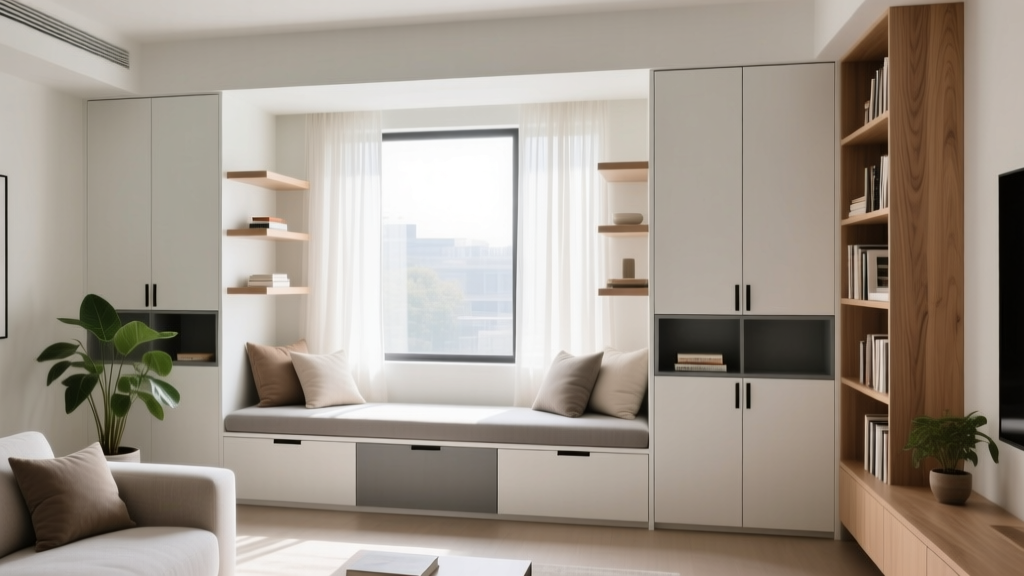
A window seat with hidden storage turns dead space into one of the most functional spots in your home. Whether you are dealing with a bay window in the living room or a narrow nook in the hallway, the right built-in design can add seating, natural light, and serious storage in one package.
Why Window Seat Storage Works
The area beneath a window is rarely used effectively. Most homes leave it empty or push a regular piece of furniture against the wall. A custom built-in window seat fills that gap literally — the bench sits flush with the wall, and the cavity underneath becomes a storage compartment accessible through a hinged lid, pull-out drawers, or open cubbies.
From a resale perspective, built-in window seats consistently rank among the top features homebuyers notice during showings. They photograph well, add architectural character, and signal that the previous owner invested in thoughtful design rather than generic furniture.
Design Options by Room
Living Room: A deep bench (18 to 22 inches) with a hinged top holds blankets, board games, or seasonal decor. Add two or three large cushions and throw pillows for comfort. Flanking bookshelves on either side create a cohesive built-in wall that looks intentional rather than added on.
Bedroom: A window seat at the foot of the bed or in a bay window alcove serves as a dressing bench with shoe storage underneath. Use pull-out drawers rather than a hinged lid — you will not have to move cushions every time you need access.
Kids Room: Lower the bench height to 14 inches and use open cubbies underneath for toy bins. Label each bin with pictures for younger children. The seat itself becomes a reading nook with a small lamp mounted on the wall nearby.
Entryway: A narrow window seat (12 to 15 inches deep) beside the front door gives you a place to sit while putting on shoes, with compartments for seasonal accessories like gloves, scarves, and umbrellas.
Materials and Construction Tips
For the frame, use 3/4-inch plywood or MDF for the box structure. Solid wood (poplar or maple) for the visible trim and face frames gives a premium look without excessive cost. The seat top should be at least 1 inch thick if it serves as a hinged lid — thinner material will warp over time.
Cushions should be 3 to 4 inches thick with high-density foam. Outdoor fabric works well for window seats because it resists fading from direct sunlight, which is inevitable in this location.
Cost Estimates
A DIY window seat with basic storage runs between 400 and 800 dollars in materials, depending on size and finish. Professional installation typically adds 1,000 to 2,500 dollars for labor, custom millwork, and finishing. For comparison, a freestanding storage bench of similar quality costs 600 to 1,200 dollars but lacks the built-in character and exact fit.
Common Mistakes to Avoid
- Blocking the radiator: If a radiator sits under the window, build ventilation slots into the bench front and top to allow heat circulation.
- Skipping insulation: The wall behind a window seat is exterior. Add rigid foam insulation behind the back panel to prevent cold spots and condensation.
- Using weak hinges: A hinged lid carrying a cushion and possibly a sitting person needs heavy-duty piano hinges or soft-close lid supports rated for the lid weight.
- Ignoring window height: The seat top should sit 16 to 18 inches below the window sill for comfortable seating with adequate head clearance.
Making the Final Decision
Start by measuring the window width and available depth. Sketch two or three configurations — hinged lid, drawers, or open cubbies — and consider which access style matches how you will use the storage. If the seat is in a high-traffic area, drawers offer the easiest daily access. For seasonal storage you open a few times a year, a hinged lid keeps the look cleaner.