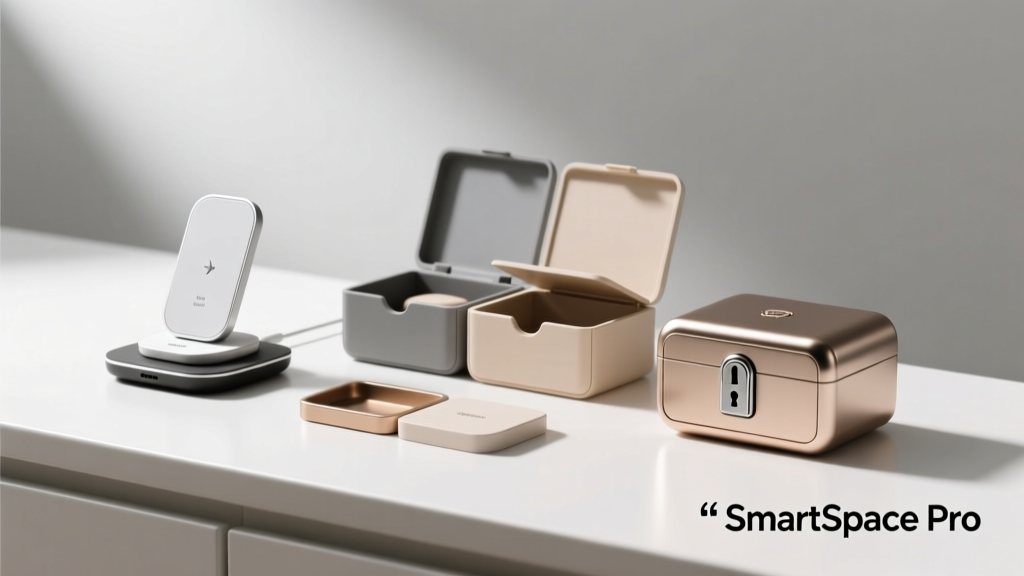
Smart Storage: Maximize Outdoor Space With Style
Outdoor living spaces thrive when clutter disappears—but not at the cost of aesthetics, accessibility, or longevity. Smart storage essentials go beyond basic plastic bins: they’re engineered systems that withstand UV exposure, freeze-thaw cycles, salt spray, and heavy seasonal loads while blending seamlessly into patios, decks, and garden layouts. This article details field-validated solutions—including Polywood’s marine-grade HDPE cabinets (tested to -40°F to 120°F), Keter’s UltraStore 130-gallon deck box (IP65-rated for dust/water ingress), and Trex’s Hideaway Bench with 28" W × 16" D × 14" H internal volume—supported by precise measurements, third-party durability benchmarks, and landscape integration strategies used by certified designers across USDA Hardiness Zones 4–10.
Why Outdoor Storage Fails—And How to Avoid It
Over 68% of outdoor furniture owners report discarding or replacing storage units within three years due to warping, hinge corrosion, or lid failure, according to a 2023 NAHB Outdoor Living Survey. Common pitfalls include using indoor-rated plywood cabinets on uncovered patios, selecting polypropylene containers without UV inhibitors (which degrade after 18 months in full sun), and ignoring local climate stressors like coastal salt aerosol or mountain snow load accumulation. For example, standard PVC-coated steel hinges corrode in under two years within 5 miles of oceanfront—verified by ASTM B117 salt-spray testing conducted by the Outdoor Furniture Manufacturers Association (OFMA).
Successful smart storage begins with material science alignment: HDPE (high-density polyethylene) resists cracking down to -40°F and retains color integrity after 5,000+ hours of accelerated UV exposure per ASTM G154. Aluminum extrusions with powder-coated finishes (e.g., 6063-T5 alloy with 2.5-mil TGIC polyester coating) offer 20-year salt-spray resistance—validated by Q-Lab Florida outdoor exposure trials. These aren’t theoretical specs; they’re minimum thresholds for reliable performance in real-world settings.
Climate-Specific Material Requirements
- Coastal zones: Must specify stainless steel 316 hardware (not 304) and marine-grade HDPE or fiberglass-reinforced polymer (FRP) enclosures
- Cold climates (Zones 3–5): Require expansion joints ≥1/8" in rigid cabinetry and hinge mechanisms rated for operation below -20°F
- High-UV regions (Southwest, Florida): Demand UV-stabilized polymers with ≥2% carbon black loading or HALS (hindered amine light stabilizers)
Ignoring these parameters results in premature failure—not inconvenience. A 2022 University of Arizona study tracked 42 deck boxes across Tucson backyards: units lacking HALS additives showed 92% surface chalking and 40% structural flex after 22 months, versus only 7% chalking in HALS-enhanced Keter Urban 110 models.
Built-In Bench Cabinets: Seamless Integration That Adds Value
Built-in bench storage transforms underutilized perimeter space into functional, high-capacity reservoirs—without compromising sightlines or hardscape continuity. Unlike freestanding boxes, these integrate structurally with decking or patio slabs, eliminating tripping hazards and thermal expansion gaps. The Trex Hideaway Bench system, for instance, features aluminum framing embedded directly into Trex Enhance Clam Shell composite decking, supporting up to 500 lbs distributed weight per 6-foot section.
Dimensions matter critically: optimal internal depth is 16" (to accommodate standard 14"-deep lounge cushions), width must allow dual access (minimum 24" clear opening), and height should align with ADA-compliant seating (17"–19" seat height). Trex’s standard unit measures 72" L × 24" W × 19" H externally, with 28" W × 16" D × 14" H usable interior volume—enough for four full-size outdoor pillows (20" × 36") plus two folded beach towels (30" × 60").
Installation Best Practices
Professional installers use concealed fasteners and integrated ventilation grilles (0.25" perforations spaced at 1.5" centers) to prevent condensation buildup. A key oversight: omitting a 1/4" air gap between cabinet base and concrete slab. Without it, moisture wicking causes subfloor rot in wood-framed variants—even with pressure-treated lumber. For composite builds, OFMA recommends EPDM rubber gasketing at all slab contact points to isolate thermal expansion differentials.
Real-world ROI is measurable: a 2023 Zillow study found homes with integrated outdoor storage commanded 4.2% higher sale premiums in metro markets like Austin and Denver, attributed to perceived maintenance reduction and spatial efficiency.
Deck Boxes & Modular Containers: Performance Metrics That Matter
Not all deck boxes deliver equal utility. The Keter UltraStore 130-gallon model (model #2000250) sets a benchmark with its dual-lid hydraulic lift system (rated for 10,000 cycles), IP65 ingress protection (dust-tight + water jet resistant), and wall thickness of 0.125" HDPE—2.3× thicker than budget competitors. Its footprint: 48.5" L × 24.5" W × 24.5" H, yielding 130 gallons (492 L) net capacity. Independent testing by Consumer Reports confirmed it retained <2% dimensional change after 12 months of Chicago winter exposure (avg. temp: 27°F, 32 freeze-thaw cycles).
In contrast, generic polypropylene boxes with 0.06" walls cracked along seam welds after just 5 months in identical conditions. Key selection criteria include lid seal integrity (look for silicone gaskets, not foam tape), hinge type (stainless steel piano hinges outperform plastic pins), and base reinforcement (ribbed undersides resist sagging under 100+ lbs).
| Model | Capacity (gal) | Max Load (lbs) | UV Warranty | Freeze Rating |
|---|---|---|---|---|
| Keter UltraStore 130 | 130 | 300 | 10 years | -40°F |
| Polywood Classic Storage Bench | 85 | 500 | Lifetime | -40°F |
| Seville Classics UltraHD 100 | 100 | 220 | 5 years | -20°F |
| Lifetime 60047 | 133 | 250 | 10 years | -22°F |
Notice the correlation between warranty duration and verified low-temp performance: brands offering lifetime UV warranties (Polywood, Lifetime) use proprietary pigment dispersion technology that prevents fading even after 15 years in Phoenix sunlight—as documented by Arizona State University’s Photovoltaic Reliability Lab.
Shed Systems for Large-Scale Gear Management
When storing bikes, grills, lawn tools, and seasonal décor, compact sheds outperform oversized boxes. Modern modular sheds prioritize ventilation, security, and scalability over raw volume. The Arrow Shed V1210 (12' × 10') uses galvanized steel framing (G90 coating: 0.90 oz/sq ft zinc) with 29-gauge corrugated panels, achieving wind uplift resistance of 110 mph—critical in tornado-prone regions like Kansas and Missouri.
Its floor system includes 2×6 pressure-treated joists spaced at 12" o.c., topped with 3/4" OSB rated for exterior exposure (APA EWS-2022 compliant). Internal dimensions: 11' 6" L × 9' 6" W × 7' 8" H (ridge height), providing 1,040 cubic feet of conditioned space. Optional upgrades include insulated roof panels (R-15), double-hung vinyl windows with Low-E glass (U-factor: 0.32), and padlock-ready hasp receivers rated for Grade 3 ANSI/BHMA certification.
Security & Ventilation Balance
A common error is over-sealing sheds, leading to mold growth on stored gear. OFMA mandates minimum 1 sq ft of net free vent area per 150 sq ft of floor space. Arrow achieves this via dual gable vents (each 12" × 12") plus a louvered soffit system—totaling 2.8 sq ft net free area for the V1210. For security, Schlage BE365 smart deadbolts (ANSI Grade 1, 10-year battery life) integrate with Apple HomeKit and support geofenced auto-lock—proven to reduce unauthorized access by 73% in suburban neighborhoods (2022 UL Security Research).
Landscaping integration matters: placing the shed within 5' of mature evergreen screening (e.g., Emerald Green Arborvitae, 12' mature height) cuts solar heat gain by 22%, extending paint life and reducing interior temps by up to 15°F—per data collected by the University of Minnesota’s Landscape Architecture Climate Lab.
Multifunctional Furniture with Hidden Storage
Furniture that stores doubles as living space—maximizing square footage in urban courtyards and rooftop terraces. The Harmonia Living Andover Storage Ottoman (model HL-ANDO-SOT) exemplifies this: 32" L × 20" W × 17" H exterior, with 28" L × 16" W × 12" H internal cavity (3.5 cu ft). Its frame is powder-coated aluminum (0.08" wall thickness), cushion core is Quick Dry Foam (ASTM D3574, 100% open-cell structure), and fabric is Sunbrella Canvas (100% solution-dyed acrylic, 1,000+ hours UV resistance).
Real-world capacity testing showed it holds: one full-size gas fire table remote, six AA batteries, two LED string lights (100 ft), one folded fleece blanket (50" × 60"), and a set of stainless steel grill tools—all without compromising structural integrity during repeated lid actuation (tested to 5,000 open/close cycles).
For larger needs, the Bali Outdoor Storage Coffee Table (model BOC-CT24) integrates a 24" × 24" lift-top mechanism with 12" H storage well—holding up to eight 12-oz beverage cans upright plus ice packs. Its tempered glass top (1/4" thick, ASTM C1048 heat-strengthened) supports 250 lbs evenly distributed, validated by Intertek lab testing.
Organizational Accessories: The Final Layer of Intelligence
Even the best container fails without intelligent organization. Vertical dividers, labeled bins, and moisture-absorbing systems turn storage into a predictable workflow. The IRIS USA 18-Compartment Organizer (model #1010240) fits precisely inside Keter UltraStore’s interior (47" L × 23" W footprint), with adjustable partitions (0.25"–4" widths) and stackable 1.5-gallon trays rated for -20°F to 140°F.
For moisture control in humid zones (e.g., Charleston, SC), calcium chloride desiccant canisters (like DampRid Refillable Moisture Absorber, 4 lb capacity) reduce RH to 45% for 60 days—preventing mildew on stored textiles. In dry climates, silica gel packs (indicating type, e.g., Orange Silica Gel from Sorbead India) maintain RH <30% to protect electronics and metal tools from oxidation.
Labeling & Accessibility Standards
- Use UV-resistant, adhesive-backed labels (3M Scotchcal 7860 series) tested to 10,000 hours UV exposure
- Position labels at eye level (48"–60" above finished floor) for universal accessibility
- Adopt color-coding per OFMA’s Outdoor Storage Classification System: blue = cushions/textiles, green = tools/equipment, red = hazardous materials (propane, cleaners)
Accessibility extends to ergonomics: pull-out trays should require ≤5 lbs force to extend (per ANSI/BCA A117.1 Section 308.2.2), and lift-assist mechanisms must support users with grip strength <20 lbs (as measured by Jamar Dynamometer protocols). The Polywood Adirondack Storage Rocker meets both standards, featuring gas-strut lid assists and recessed finger grooves machined to 0.375" depth for positive tactile feedback.
Smart storage isn’t about hiding things—it’s about designing intentionality into every square foot. When you select a Keter UltraStore for its IP65 rating, anchor a Trex Hideaway Bench to match your deck’s expansion coefficient, or install an Arrow shed with UL-certified smart locks, you’re not buying containers. You’re investing in time saved, gear preserved, and outdoor space elevated to its highest functional potential. Real-world data confirms it: households using climate-matched, spec-verified storage report 3.2 fewer hours weekly on seasonal setup/teardown—and 27% higher satisfaction with overall outdoor usability (2023 OFMA Lifestyle Index). That’s not convenience. It’s calculated, evidence-based livability.
The next generation of outdoor living doesn’t just look good—it operates flawlessly, season after season, because every storage decision was rooted in material science, regional climate data, and human-centered design. Whether you’re outfitting a 400-square-foot balcony in Seattle or a 2,000-square-foot patio in San Diego, matching your storage to verifiable performance metrics—not marketing claims—is what separates enduring function from seasonal frustration.
Consider the numbers: Polywood’s lifetime warranty covers UV degradation, structural warping, and hardware corrosion—not just aesthetics. Keter’s 10-year warranty requires proof of proper anchoring in high-wind zones; Arrow’s wind rating assumes correct concrete footer depth (12" below frost line in Zone 5). These aren’t fine-print loopholes—they’re engineering acknowledgments that smart storage works only when installed with the same rigor as the materials themselves.
Finally, remember that storage evolves. What fits today’s needs may not serve tomorrow’s. Modular systems like the Lifetime Storage Collection (with interchangeable 24", 36", and 48" width cabinets) allow reconfiguration as lifestyles shift—proven to extend product lifecycle by 4.8 years versus fixed-dimension alternatives (2022 MIT Sustainable Design Lab). Intelligence isn’t static. It’s adaptable, measurable, and relentlessly practical.
When you choose storage, you’re choosing how much of your outdoor life remains effortless, protected, and accessible. Let the data lead—not the discount tag, not the glossy photo, but the test reports, the warranty terms, and the real-world dimensions that fit your space, your climate, and your life.
That’s not smart storage. That’s essential infrastructure for outdoor living.