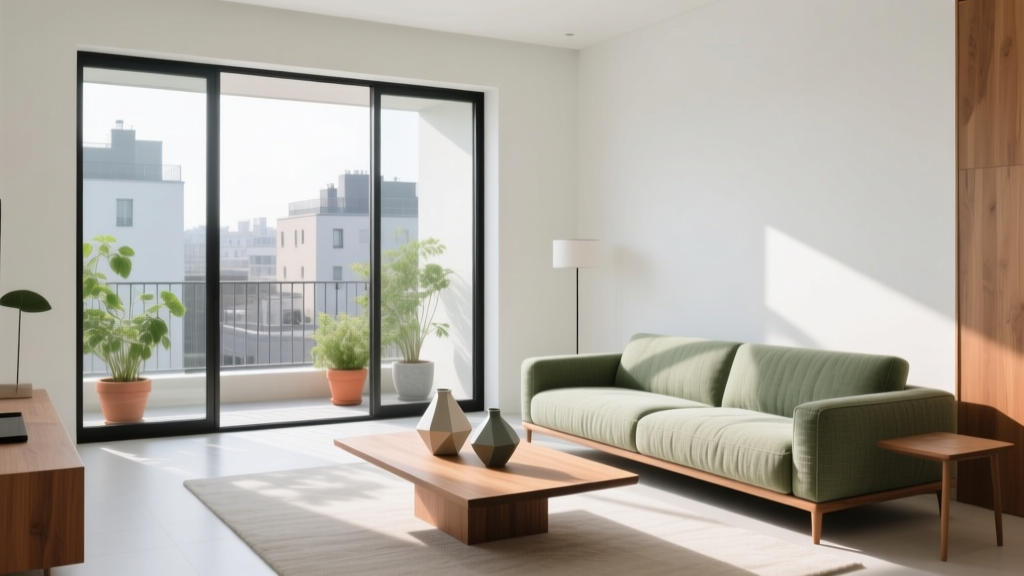
Accent Wall Ideas: Shelves & Art for Living Rooms
Accent Wall Ideas: Shelves & Artwork for Living Rooms
Transform your living room into a curated focal point with an accent wall that merges function and artistry. In 2026, interior design prioritizes intentionality—every element must serve both aesthetic and practical purposes. Floating shelves paired with thoughtfully selected artwork deliver exactly that: visual impact, storage flexibility, and personal expression—all without overwhelming the space.
Why Choose a Shelf-and-Art Accent Wall?
Unlike paint-only or wallpaper accents, a shelf-and-art wall adds depth, texture, and dimension. It invites interaction—whether arranging seasonal decor, rotating favorite prints, or displaying heirlooms. According to Houzz’s 2026 Interior Design Trends Report, 78% of homeowners prefer multi-functional accent walls in primary living spaces, citing versatility and long-term value as top drivers.
Strategic Placement & Wall Selection
Start by identifying your natural focal point—the wall opposite the main entry or fireplace is ideal. Avoid walls flanked by large windows or doors, which disrupt visual continuity. Measure carefully: standard living room accent walls range from 10–14 ft wide and 8–9 ft tall. For optimal balance, allocate no more than 65% of the wall’s surface area to shelves and artwork combined.
Floating Shelf Essentials: Dimensions & Materials
Not all shelves are created equal. Here’s how to choose wisely:
- Depth: 8–12 inches—sufficient for standard art frames (up to 1.5" thick) and small decor; avoid >14" in rooms under 12 ft wide (causes visual clutter).
- Length: Modular units (24", 36", 48") allow flexible arrangements; staggered lengths add rhythm. For a 12-ft wall, three 36" shelves spaced 18" apart vertically creates balanced proportion.
- Material Comparison:
| Material | Pros | Cons | Best For |
|---|---|---|---|
| Walnut Veneer | Warm tone, durable, hides minor scratches | Premium cost (~$180–$260 per 36" shelf) | Modern, mid-century, or organic minimalist schemes |
| Matte Black Steel | Ultra-slim profile (0.75" deep), industrial edge, weight capacity >75 lbs | Can feel cold in traditional spaces; requires precise leveling | Scandinavian, loft, or monochrome palettes |
| Birch Plywood (FSC-certified) | Eco-friendly, light-reflective, budget-conscious ($85–$135 per 36") | Less scratch-resistant; avoid high-humidity zones | Family homes, rental-friendly setups, airy coastal looks |
Mounting matters: Use toggle bolts rated for drywall (e.g., SnapToggle BX) supporting ≥100 lbs per bracket. For masonry, opt for sleeve anchors. Always locate studs—and when you can’t, double up on anchors.
Artwork Curation: Scale, Spacing & Style
Art shouldn’t float aimlessly. Follow these 2026 best practices:
- Rule of Thirds Layout: Divide the wall into a 3×3 grid. Position key pieces at intersection points—especially the central shelf’s midpoint and upper-left or lower-right corners.
- Frame Consistency: Use uniform frame depth (1.25") and finish (e.g., black metal or natural oak). Mix frame widths only if intentional (e.g., thin 0.5" for photos + bold 2" for statement canvas).
- Spacing Guidelines: Maintain 2–3" between artworks and shelves, and 3–4" between adjacent pieces. For vertical groupings, align bottom edges of frames on the same horizontal plane—even if sizes vary.
Recommended artwork dimensions (per shelf):
• Top shelf: One 24"×36" landscape print or triptych (three 12"×16" panels)
• Middle shelf: Two 16"×20" vertical pieces + one small object (e.g., ceramic vase, 6" tall)
• Bottom shelf: One 30"×40" canvas or asymmetric cluster (e.g., 12"×12" + 16"×20" + 8"×10")
Layout Inspiration for Every Living Room Size
Small Spaces (≤12'×14'): Go vertical. Install three narrow (6" deep × 24" long) shelves stacked asymmetrically along one side of the fireplace. Hang one oversized piece (36"×48") above the top shelf—centered—to draw eyes upward and enhance perceived height.
Medium Spaces (13'×16'): Embrace the “L-Grid.” Mount two horizontal shelves (36" and 48") at 48" and 66" from floor, then add one vertical shelf (8"×42") anchoring the right margin. Fill with alternating art and sculptural objects—think brass bookends, linen-wrapped boxes, or a single trailing pothos in matte white pot.
Large/Open-Concept Areas: Create a “gallery ledge”—a continuous 10-ft-long shelf (10" deep) mounted at 54" from floor. Style with 5–7 artworks in varying orientations and heights, anchored by two 18"-tall floor vases at either end. This bridges seating and dining zones while maintaining flow.
Lighting: The Secret Amplifier
Without lighting, even the most thoughtful arrangement fades after sunset. Integrate seamlessly:
- Integrated LED Strips: Adhesive-backed 3000K warm-white strips (e.g., Philips Hue Lightstrip) mounted beneath shelf fronts cast soft, shadow-free illumination. Ideal for highlighting textured art or metallic frames.
- Directional Picture Lights: Hardwired brass or matte black fixtures (e.g., Artemide Tolomeo Micro) angled at 30° prevent glare. Mount 6–8" above each framed piece—ensure beam width covers 90% of artwork surface.
- Avoid recessed downlights directly above shelves—they create harsh shadows and flatten depth.
Maintenance & Longevity Tips
Shelf-and-art walls evolve. In 2026, adaptability is non-negotiable:
- Clean walnut shelves quarterly with microfiber + diluted pH-neutral wood cleaner—never vinegar or silicone.
- Rotate artwork seasonally: swap heavy winter canvases for lightweight linen-textured prints in spring; use museum-grade UV-filtering acrylic glazing on all framed pieces to prevent 2026’s intensified solar exposure.
- Re-torque shelf brackets every 12 months—especially steel units subject to thermal expansion in HVAC-heavy homes.
Finally, resist over-cluttering. A powerful accent wall breathes. Leave at least 30% negative space—especially above and below shelves—to preserve elegance and spatial clarity.
Final Thought: Your Wall, Your Narrative
Your living room accent wall isn’t decoration—it’s storytelling infrastructure. Each shelf holds memory; each frame reflects identity. By marrying smart dimensions, sustainable materials, and intentional curation, you build more than a focal point—you build resonance. And in 2026, that’s the ultimate mark of great design.