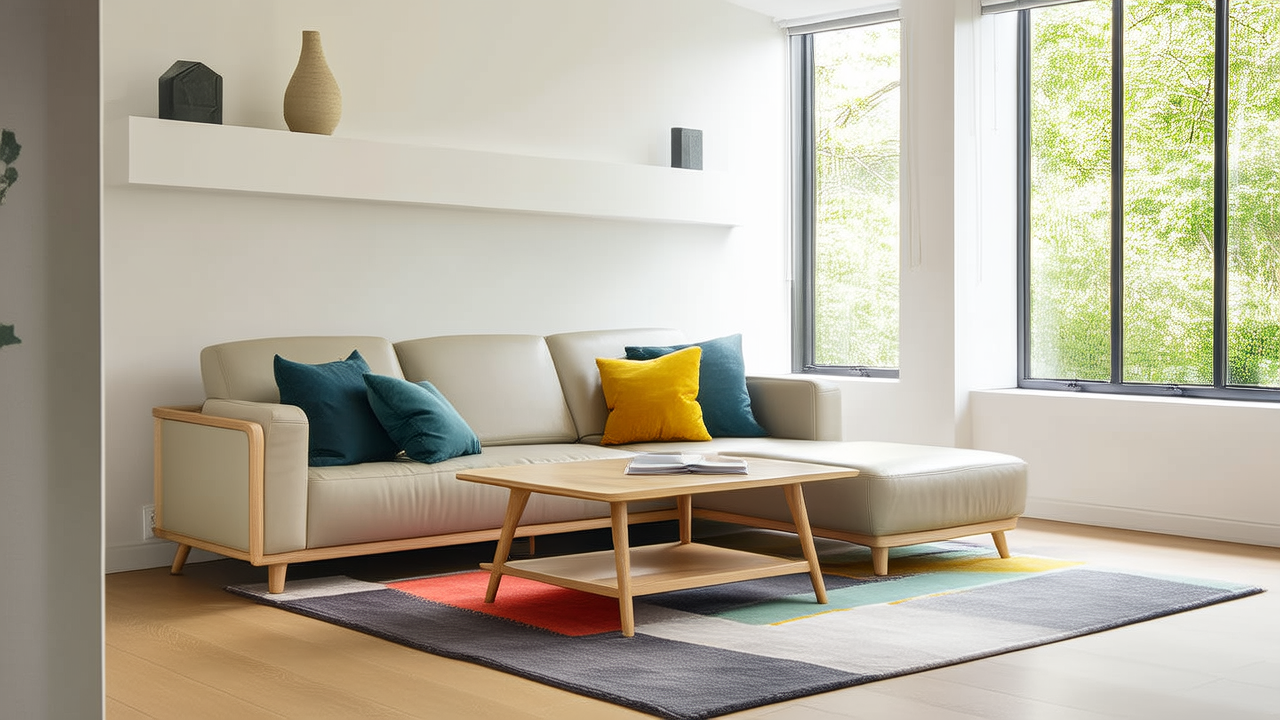
Industrial Loft Living Room Ideas for 2026
Raw, Refined, and Real: Why Industrial Loft Still Dominates in 2026
Forget sterile minimalism or over-saturated farmhouse—industrial loft is having a serious moment in 2026. And it’s not just about exposed brick and ductwork anymore. Today’s iteration balances grit with warmth, functionality with character, and authenticity with intentionality. Whether you’re converting a former warehouse in Brooklyn or adding edge to a suburban split-level, this aesthetic delivers drama without sacrificing comfort. At FurnishCuration.com, we’ve tested dozens of layouts, materials, and finishes—and distilled what actually works (and what’s just Instagram hype).
Sofas That Anchor Without Overpowering
The sofa is the heartbeat of any industrial loft living room—and it must hold its own against raw ceilings and steel beams. In 2026, the trend leans toward textural contrast: think top-grain leather upholstery paired with blackened steel legs or reclaimed oak frames.
- Top Pick: The Foundry Sectional by Forge & Grain—available in full-grain chestnut leather ($2,895) with powder-coated matte black steel base. Its low-profile silhouette (24" seat height, 32" depth) keeps sightlines open, crucial in loft spaces where vertical volume matters.
- Budget-Friendly Alternative: The Brickline Mid-Century Sofa (West Elm, $1,499) features a solid black walnut frame and charcoal performance velvet—durable enough for pets and kids, yet refined enough for gallery walls.
Pro tip: Avoid overly plush, high-back designs—they visually shrink ceilings. Stick to seat heights between 18–24", and ensure at least 36" clearance from coffee table to sofa front for comfortable circulation.
Coffee Tables: Function Meets Found-Object Flair
A coffee table in an industrial loft isn’t just furniture—it’s a statement piece with structural integrity. In 2026, buyers prioritize dual-purpose builds: storage + surface, or lift-top + casters.
- Editor’s Choice: The Steel & Slab Coffee Table (FurnishCuration Studio Collection, $1,295) pairs a 2"-thick live-edge black walnut slab (approx. 48" × 28") with adjustable-height matte black steel legs (height range: 14–18"). Includes hidden under-shelf for remotes or magazines.
- Space-Smart Option: For studios or narrow lofts, try the Rolling Iron Cart Table (CB2, $599)—30" × 18" × 27"H, with locking casters and two-tier shelving. Doubles as a bar cart or side station.
Measure twice: Allow minimum 18" between sofa and table edge. For L-shaped layouts, consider two smaller tables (e.g., 24" cubes) instead of one monolith—enhances flexibility and visual rhythm.
Layouts That Honor Volume—and Flow
Loft living demands smart spatial choreography. With 12'+ ceilings and open sightlines, clutter kills the vibe. Our 2026-tested layout principles:
- The Zoned Triangle: Position sofa, media unit, and seating cluster (e.g., two armchairs + ottoman) to form a loose triangle—ensuring clear paths (min. 36" wide) and balanced focal points. Ideal for rectangular lofts > 20' × 14'.
- The Floating Island: In square or irregular lofts, anchor the space with a freestanding entertainment center (not wall-mounted), flanked by modular seating. This creates intimacy without boxing in the room.
- Vertical Layering: Use tall, narrow shelving (e.g., 72"H × 12"W steel-and-wood units) along perimeter walls to define zones *without* blocking light or sightlines.
Remember: In lofts with mezzanines or catwalks, keep floor-level elements low (<30"H) to preserve the sense of upward expansion.
Rugs & Decor: Warmth Without Weakening the Edge
Here’s where many industrial schemes fail: going too cold. A well-chosen rug adds acoustic softness, defines zones, and introduces organic texture. In 2026, natural fibers reign—but with intentional imperfection.
- Material Matters: Look for handwoven jute, undyed wool, or vintage Turkish kilims with subtle patina. Avoid synthetic blends—they clash with authentic metal/wood tones.
- Size Specs: For a standard 10' × 12' seating zone, choose a 9' × 12' rug—with all sofa front legs and at least front legs of chairs resting on it. Too small? It reads as an afterthought.
- Top Rug Picks:
- Forge Kilim Runner (Ruggable, $429, 2.5' × 8') — durable, washable, with faded indigo and rust motifs.
- Charred Oak Area Rug (The Inside, $895, 8' × 10') — hand-tufted wool with subtle charcoal-dyed variation mimicking weathered timber.
Decor accents should feel discovered—not purchased: vintage apothecary jars (cluster 3–5 on a shelf), Edison bulb pendants (2700K color temp for warmth), and matte black wall sconces with adjustable arms. Skip glossy finishes; matte, satin, or brushed textures align with 2026’s grounded industrial ethos.
Entertainment Centers: Where Tech Disappears Gracefully
In 2026, entertainment centers are no longer furniture—they’re integrated infrastructure. The goal? Hide cables, cool electronics, and support large screens—without looking like a server rack.
- Best-in-Class: The Apex Media Console (FurnishCuration x Modloft, $2,195) features ventilated steel chassis, sliding barn-door panels (reclaimed pine), and built-in cable management trays. Fits TVs up to 75" (max weight: 120 lbs) and includes adjustable shelves for AV gear. Dimensions: 72"W × 18"D × 24"H.
- Modular Alternative: The GridWall System (IKEA, $349 + accessories) lets you build custom configurations using steel rails, floating shelves, and fabric-covered speaker enclosures—ideal for renters or evolving needs.
Key specs to verify: ventilation gaps ≥ 1/2", rear access panels, and weight-rated mounts. Never mount a TV directly to drywall in a loft—always anchor into steel studs or use a reinforced ledger board.
Wrapping Up: Your Action Plan for 2026
Industrial loft living isn’t about collecting props—it’s about curating coherence. Start with your ceiling and floor: if you have exposed ducts or concrete, lean in. If not, replicate texture thoughtfully (e.g., a matte black ceiling fan, honed concrete-look tiles). Then follow this 3-step launch sequence:
- Anchor: Choose one hero piece—a sofa, coffee table, or media console—that embodies your core material language (steel + wood, iron + leather, etc.).
- Layer: Add two contrasting organic elements: a jute rug + live-edge shelf, or a wool throw + ceramic floor vase.
- Refine: Edit ruthlessly. Remove anything that doesn’t serve function *or* reinforce the aesthetic. In lofts, negative space isn’t empty—it’s breathing room.
You don’t need a converted factory to pull off industrial loft. You need intention, integrity in materials, and the confidence to let structure shine. As we move deeper into 2026, the most compelling spaces aren’t the loudest—they’re the most authentically resolved. So go ahead: expose a beam, stain a floor, weld a leg. Just make sure every choice has a reason—and a story.